Language:



I. Introduction: Requirements for Off-Gas Treatment in Ozone Disinfection
Ozone (O₃) is widely used in healthcare for medical instrument sterilization, ward air disinfection, and medical wastewater treatment, owing to its strong oxidizing power. As a broad‑spectrum bactericide, ozone effectively inactivates a wide range of pathogens, viruses, and even resistant spores. However, after the disinfection cycle, the off‑gas still contains a residual ozone concentration. If discharged untreated, it can corrode equipment, harm operator health, and adversely affect the surrounding environment.
Ozone slowly decomposes into oxygen at room temperature, but this natural process is too slow to meet the rapid re‑entry safety requirements typical of medical settings. Thermal decomposition requires heating the gas to above 400 °C for quick and complete destruction, which entails high energy and equipment costs. In contrast, catalytic decomposition converts ozone to oxygen at ambient temperature without additional heating, consuming very little energy. It has become the most widely adopted technology for ozone abatement in many applications.
Ozone decomposition catalysts typically use manganese dioxide (MnO₂) as the primary active component. High‑performance grades often incorporate other transition metal oxides such as copper oxide and iron oxide to form composite catalytic systems that improve activity, moisture tolerance, and service life. These active components are prepared via co‑precipitation and high‑temperature calcination to form stable mixed‑oxide structures. The core reaction is: 2O₃ → 3O₂, and the catalyst lowers the activation energy so that the reaction proceeds rapidly at room temperature.
In healthcare disinfection, the selection of the ozone decomposition catalyst directly affects the safety, operational efficiency, and overall cost of the disinfection equipment. This article systematically analyzes the key technical specifications, common misconceptions, and engineering considerations for catalyst selection under the specific conditions of medical applications.
The ozone environment in healthcare disinfection differs significantly from that in industrial off‑gas treatment. Understanding these differences is essential for rational catalyst selection.
Wide concentration fluctuations. Ozone concentrations vary widely in medical disinfection. For air disinfection, concentrations are typically low (ppm level); for instrument sterilization and sterilizer cabinets, they can reach tens to hundreds of ppm. The catalyst must maintain stable decomposition efficiency across this broad range.
Severe humidity conditions. Disinfection processes often require high relative humidity (typically above 70 %), but water vapor is a primary deactivation factor for manganese‑based catalysts. Studies show that water molecules compete with ozone for adsorption on oxygen vacancies, occupying active sites and reducing decomposition efficiency. The higher the relative humidity, the more severe the deactivation. At 90 % RH, many manganese‑based catalysts exhibit significant performance degradation.
Extremely high safety requirements. Medical applications impose strict constraints on material safety. Catalysts must not contain combustible components—for example, activated‑carbon‑supported catalysts pose a combustion risk under high‑concentration ozone. They must not release dust or generate toxic by‑products, and the materials themselves should meet biocompatibility requirements.
Intermittent operation. Medical disinfection equipment typically runs in batch mode, with frequent start‑stop cycles that cause temperature cycling, potentially leading to structural fatigue of the catalyst. At the same time, the system must reduce the ozone concentration to below the safety threshold within a short time after disinfection to allow rapid personnel re‑entry.
Catalytic activity is the primary measure of a catalyst's performance. High activity enables higher ozone removal, lower catalyst loading, and smaller equipment footprint. Activity depends on the catalyst formulation, elemental system, manufacturing process, and dispersion of active components.
In healthcare settings, an ozone removal rate of 99 % or higher at ambient temperature is typically required. After passing through the catalyst, the outlet ozone concentration should be below the safety threshold—the World Health Organization recommends a maximum allowable 8‑hour exposure limit. In practice, some high‑performance catalysts can reduce the outlet concentration to very low levels.
Specific surface area is a critical parameter that determines the catalyst's adsorption capacity and number of active sites. It is usually measured by the BET method and reported in m²/g. In general, higher surface area means better ozone adsorption, greater contact area, and higher catalytic efficiency. For high‑quality manganese‑based catalysts, the BET surface area typically ranges from 160 to 240 m²/g.
It should be noted that high surface area must come from the active components themselves; otherwise, the practical benefit is limited. Some catalysts use inert supports to boost surface area, but if the active component loading is insufficient, the actual catalytic performance may be compromised.
The active component content directly determines the catalytic capacity per unit mass. Low‑cost catalysts often incorporate more inert materials to reduce cost or improve formability. Generally, higher active content means greater catalytic power per unit volume.
For medical applications, catalysts with high active component content are recommended. Some high‑performance grades achieve active contents of over 80 %. In certain specialized applications, powdered catalysts can have active contents exceeding 99 %. Higher active content allows for smaller loading volumes to achieve the same treatment effect, helping to miniaturize equipment.
During long‑term operation, the catalyst must withstand gas flow impact and equipment vibration. Insufficient mechanical strength can lead to particle breakage and fines generation, increasing pressure drop, raising fan load, and even causing dust contamination. Therefore, mechanical strength is critical for reliable long‑term performance in medical devices.
Industry‑leading products typically have an average crush strength greater than 40‑45 N/cm. When selecting, request strength test data from the supplier and pay attention to strength retention during shipping, loading, and extended use.
Moisture resistance is arguably the most important selection criterion for healthcare applications. Rapid deactivation of manganese‑based catalysts under high humidity is a major technical challenge. Competitive adsorption of water and ozone on oxygen vacancies is the primary cause of deactivation.
Current approaches to improving moisture resistance include elemental doping (e.g., with Ag, Ce, etc.), crystal phase engineering, and surface acidity/basicity tuning. Studies show that with appropriate doping, catalysts can maintain high ozone conversion at 70 % RH; even under extreme 90 % RH, optimized catalysts can retain a useful level of performance.
In medical selection, always request performance data under various humidity conditions, not just initial dry‑basis data.
Noble metals (Pd, Pt, etc.). Noble‑metal catalysts offer high initial activity but are costly. In medical environments, where complex poisoning atmospheres are absent, their poisoning resistance advantage is not fully utilized, making them less cost‑effective.
Non‑noble metals (Mn, Cu oxides, etc.). Manganese‑based non‑noble catalysts are the mainstream choice for medical applications. They combine excellent low‑temperature activity with relatively low cost. The addition of copper oxide, iron oxide, and other components to form composite systems further improves activity and moisture tolerance.
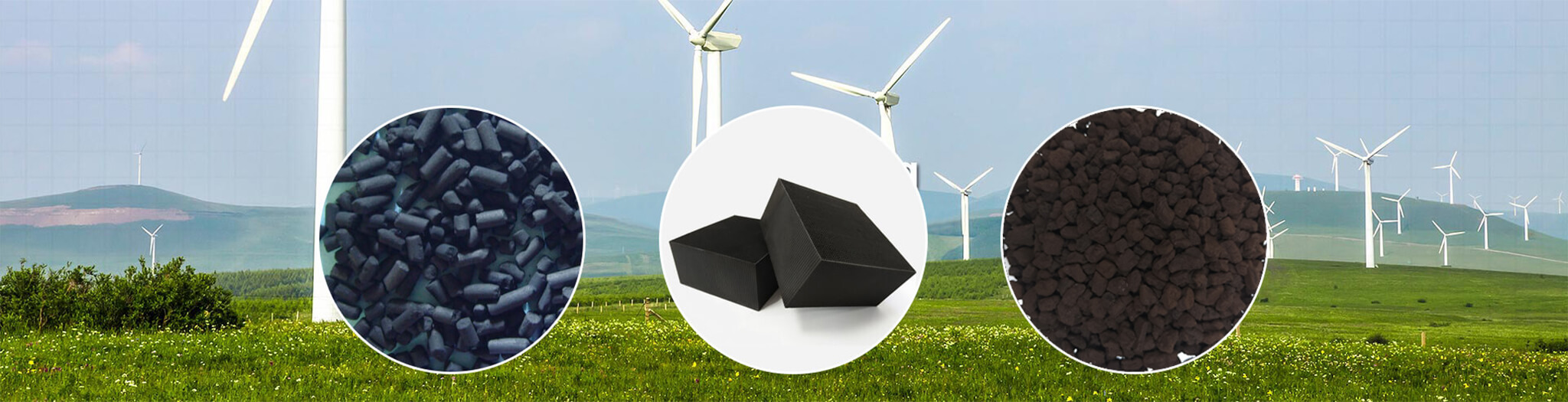
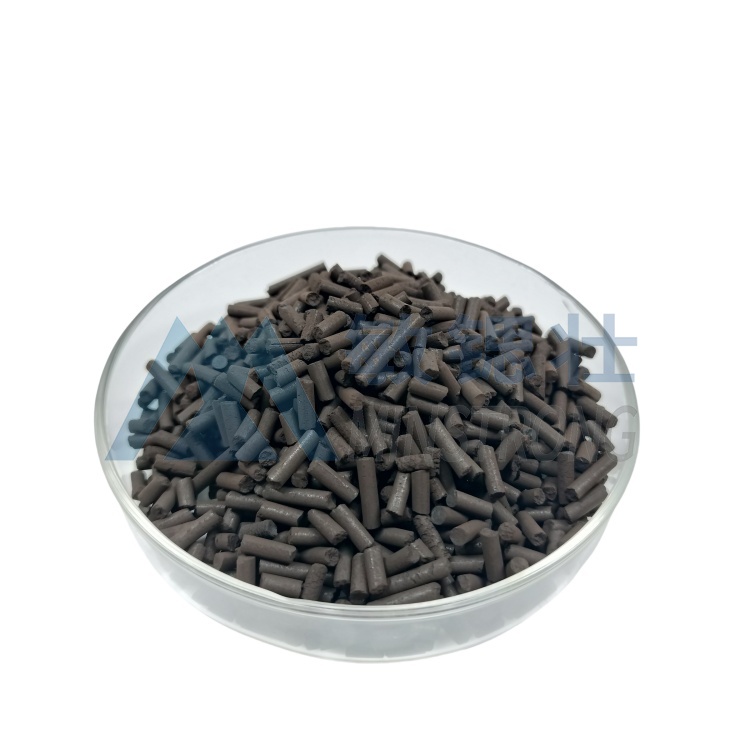
Granular. Suitable for low‑velocity, low‑flow, and end‑of‑pipe fine‑treatment applications. Granular catalysts have higher packing density and larger contact area, but also higher pressure drop.
Honeycomb. Suitable for high‑flow, low‑pressure‑drop applications. Honeycomb catalysts can have cell densities up to 500 cells/in², offering low resistance and high efficiency. They are advantageous in medical air‑disinfection systems that handle larger air volumes.
Foam. Suitable for rapid decomposition of high‑concentration ozone, featuring three‑dimensional interconnected pore structures for excellent mass transfer.
The choice of form should be based on matching air flow, pressure‑drop requirements, and available installation space. Small medical sterilizers may use granular or honeycomb forms; large air‑disinfection systems are better served by honeycomb to minimize system resistance.
Based on the above analysis, the following framework is recommended for catalyst selection in healthcare disinfection:
| Selection Step | Key Content | Recommended Output |
|---|---|---|
| 1. Condition survey | Ozone concentration, humidity, flow, temperature, operation mode | Condition parameter sheet |
| 2. Performance comparison | Decomposition rate, surface area, active content, strength, deactivation curve | Performance scorecard |
| 3. Safety verification | Combustibility, dust, by‑products, certifications | Safety assessment report |
| 4. Pilot testing | 72‑h continuous run, monitor efficiency and pressure drop | Test data log |
| 5. Comprehensive evaluation | Performance + compatibility + support + cost | Selection recommendation |
Healthcare disinfection imposes unique requirements on ozone decomposition catalysts—different from general industrial applications—including performance retention under high humidity, strict safety constraints, adaptability to wide concentration ranges, and long‑term stability. Selection should be based on a scientific evaluation system centered on the five core metrics: catalytic activity, specific surface area, active component content, mechanical strength, and moisture resistance, with tailored matching to the specific operating conditions.
Proper selection is not only a technical matter but also directly affects the safety, efficiency, and life‑cycle cost of medical equipment. We recommend that equipment manufacturers and end‑users build internal selection databases, record actual field performance data, and continuously refine their decision‑making processes, so as to drive the development of safer and more efficient medical disinfection systems.
This article is based on general technical principles and publicly available research findings in the field of catalytic materials. It is intended as a technical reference for ozone decomposition catalyst selection in healthcare disinfection applications.
author:Gloria
date:2026-06-24
Contact: Candyly
Phone: 18142685208
Tel: 0731-84115166
Email: minstrong@minstrongchina.com
Add: E2 Building, Kinglory Science And Technology Industrial Park, Wangcheng Area, Changsha, Hunan, China.