Language:



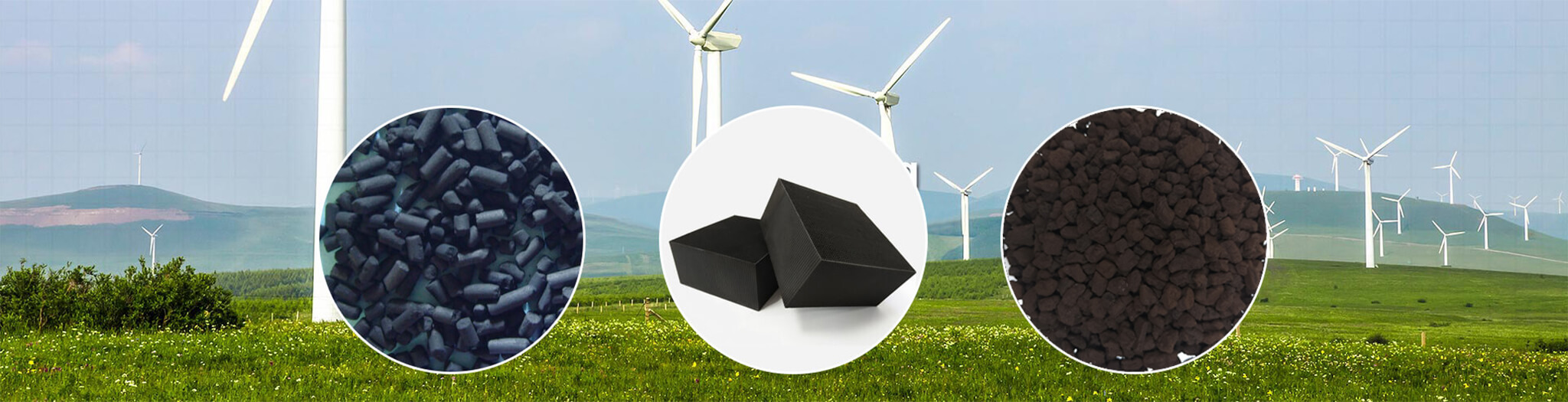
Volatile organic compounds (VOCs) emitted from industrial manufacturing pose serious threats to the atmospheric environment and human health, and their emissions are now strictly regulated. Catalytic combustion enables complete oxidation of VOCs at lower temperatures, reducing energy consumption and avoiding secondary pollution from incomplete combustion, making it one of the most promising VOCs abatement routes. The application of catalytic combustion technology relies on high‑performance catalysts.
The evolution of catalyst geometry from particulate to monolithic forms has profoundly influenced industrial VOCs treatment practices. Honeycomb ceramic monolithic catalysts overcome the drawbacks of traditional particulate catalysts, such as high bed pressure drop, large temperature gradients, and uneven reactant distribution. Owing to their superior structural properties, monolithic catalysts play an irreplaceable role in harsh exhaust treatment conditions involving high space velocities and large throughputs.
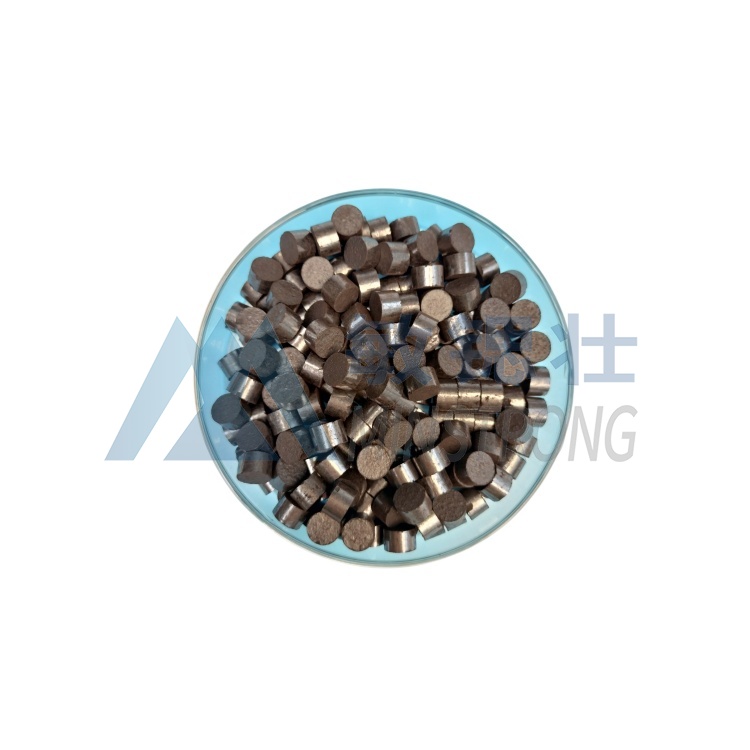
A monolithic catalyst typically consists of three components:
The mainstream material is cordierite honeycomb ceramic (2MgO·2Al₂O₃·5SiO₂), which provides the mechanical skeleton. Cordierite honeycomb ceramics feature high mechanical strength, good thermal stability, and low thermal expansion coefficient, enabling them to withstand the thermal cycling encountered in industrial exhaust treatment. However, cordierite has a relatively low specific surface area (approximately 0.7–3 m²/g), making it difficult to directly disperse the active components.
A uniform washcoat applied to the channel walls of the substrate increases the surface area and helps disperse and stabilize the active components. Because cordierite has low surface area, high‑surface‑area washcoat materials (e.g., γ‑Al₂O₃, CeO₂, SiO₂ nanoparticles) are needed. Rare‑earth or alkaline‑earth modified γ‑Al₂O₃ is one of the better‑performing washcoat options.
The catalytically active species loaded onto the washcoat can be noble metals (e.g., Pt, Pd) or non‑noble metal oxides (e.g., Mn, Cu, Ce transition metal oxides and perovskite‑type oxides).
Typical preparation methods for monolithic catalysts include the washcoating method, incipient wetness impregnation, and sol‑gel techniques. In the washcoating method, for example, a slurry is first prepared by mixing nanoparticles with a binder; the cordierite substrate is immersed in the slurry, then the excess slurry in the channels is removed, followed by drying and calcination to obtain the washcoated support. Then, a precursor solution of the active component is impregnated onto the washcoated support, and after a second drying and calcination step, the monolithic catalyst is obtained. Key parameters of the washcoating process (slurry concentration, immersion time, drying and calcination profiles) directly affect the uniformity, adhesion, and final catalytic performance.
Compared with traditional particulate catalysts, monolithic catalysts offer several significant advantages for industrial VOCs treatment:
The honeycomb structure with regular channels greatly reduces flow resistance. Monolithic catalysts exhibit a substantial pressure‑drop advantage over particulate catalysts, which is especially important for treating large‑volume, low‑concentration VOCs streams.
Monolithic catalysts have numerous channels with thin walls; there is no radial bulk transport between parallel channels, so they can be considered radially adiabatic. Due to their high geometric surface area, gas‑to‑surface heat transfer is rapid. In contrast, particulate catalysts require heating a larger mass, resulting in longer ignition times. The thin active coating on monolithic catalysts provides high internal utilization, making them particularly suitable for fast‑reaction, high‑space‑velocity, and mass‑transfer‑controlled catalytic combustion processes.
Monolithic catalysts ensure uniform flow distribution with no hot spots or channeling, and the radial and axial temperature gradients are greatly reduced. Particulate catalysts, in the strongly exothermic catalytic combustion reaction, tend to develop “hot spots” and localized high temperatures, which can cause catalyst sintering and deactivation.
Monolithic catalysts do not generate dust and are not easily blocked by incoming particulate matter. Particulate catalysts, however, have high bed pressure drop and are prone to clogging when dust‑laden gas passes through; they also have lower mechanical strength and are more easily crushed.
The modular design facilitates on‑site installation, replacement, and servicing.
Despite their significant advantages, monolithic catalysts still face several key technical challenges in practical applications:
Cordierite’s low specific surface area (about 0.7–3 m²/g) hinders the efficient dispersion of active components. This is the most fundamental issue – insufficient surface area directly limits the number and accessibility of active sites.
The washcoat applied by coating methods may peel off during long‑term operation due to gas flow erosion, thermal cycling, and catalyst handling. Loss of active components with the washcoat significantly shortens catalyst lifetime. Ensuring strong binding of the active components to the substrate and improving wear resistance under harsh reaction conditions remain key research priorities.
Conventional preparation methods (such as washcoating and impregnation) can achieve high loadings, but the active components tend to aggregate, and binders used in the process may encapsulate them, resulting in lower catalytic activity of monolithic catalysts compared with their powdered counterparts.
External heating methods (heating jackets, heating furnaces, etc.) lead to high capital and operating costs. Novel heating technologies, such as microwave‑assisted catalytic combustion, can mitigate this issue.
Real industrial exhaust contains not only VOCs but also impurities such as water vapor, sulfides, and chlorides, which pose continuous challenges to the stability of monolithic catalysts.
To address these challenges, researchers have systematically explored optimization strategies from multiple directions:
Doping with different metals and designing favorable crystalline structures can enhance catalytic activity while reducing costs. Non‑noble metal oxides (e.g., Mn‑, Cu‑, Ce‑based) are of particular interest for their cost advantages. Perovskite‑type catalysts (ABO₃) stand out for their high cost‑effectiveness, good catalytic activity, and strong stability in VOCs catalytic combustion. Studies have also shown that MnOx‑CeO₂ mixed oxides exhibit much higher activity than pure MnOx or pure CeO₂, attributable to the synergistic effects in the mixed oxide.
Developing novel nano‑oxide washcoat materials can simultaneously increase surface area and enhance adhesion to the substrate. Monolithic catalysts prepared with different washcoat materials (CeO₂, γ‑Al₂O₃, SiO₂) show marked differences in catalytic performance. Washcoats with higher surface areas and better resistance to detachment are more favorable for dispersing and stabilizing active components.
Developing simple and efficient preparation methods that ensure strong bonding between active components and the substrate under severe reaction conditions is essential. Exploring new coating techniques (e.g., vacuum coating), binder systems, and drying/calcination protocols can help solve the problems of washcoat detachment and active component agglomeration. The introduction of three‑dimensional ordered macroporous (3DOM) materials can compensate for the low specific surface area of perovskite catalysts.
Synergistic integration of monolithic catalysts with microwave heating has emerged as a new research direction. Microwave catalytic combustion combines microwave irradiation with wave‑absorbing catalysts, generating high‑temperature hot spots on the catalyst surface through selective heating, thereby oxidizing VOCs at these high‑activity sites. In addition, the combination of adsorption concentration and catalytic combustion has shown promise in industrial applications.
Monolithic catalysts, with their low pressure drop, high heat and mass transfer efficiency, excellent mechanical strength, and ease of maintenance, have become the mainstream catalyst form for industrial VOCs catalytic combustion. Current research focuses on two main aspects: (1) doping different metals to design catalysts with favorable crystalline structures to improve activity and reduce cost; and (2) developing simple and efficient preparation processes to ensure strong bonding of active components to the substrate under harsh conditions.
Future development of monolithic catalysts will move toward higher activity, better stability, broader applicability, and lower cost. At the same time, synergistic optimization of tolerance to water, sulfur, chlorine, and other components, along with the introduction of novel manufacturing technologies such as 3D printing, will open new possibilities for the application of monolithic catalysts in a wider range of industrial VOCs treatment scenarios.
author:Gloria
date:2026-06-30
Contact: Candyly
Phone: 18142685208
Tel: 0731-84115166
Email: minstrong@minstrongchina.com
Add: E2 Building, Kinglory Science And Technology Industrial Park, Wangcheng Area, Changsha, Hunan, China.