Language:



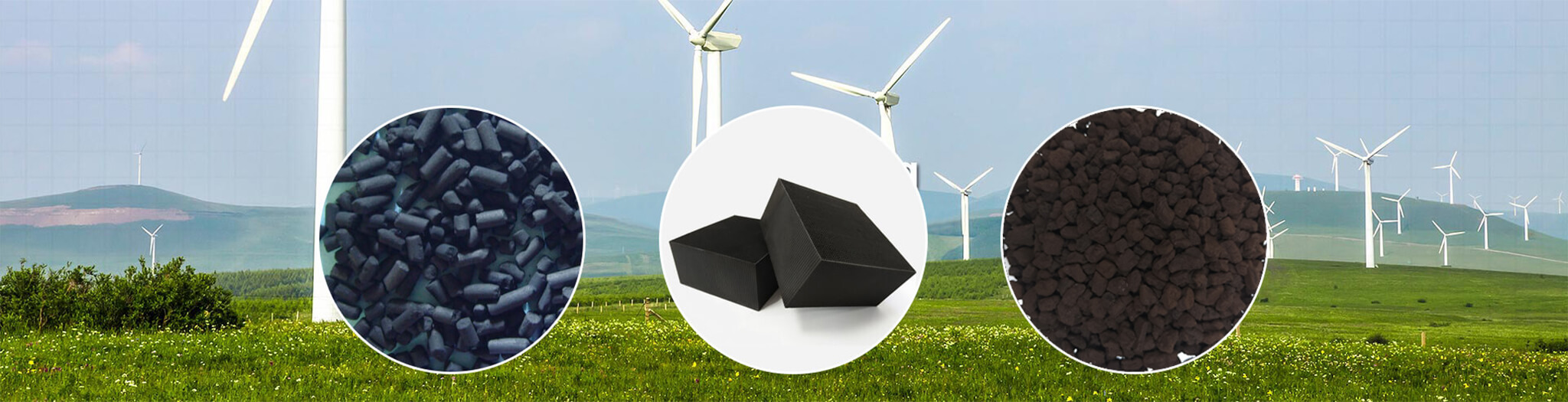
The core role of manganese dioxide (MnO₂) catalysts in ozone catalytic oxidation for industrial wastewater treatment is to accelerate ozone decomposition into more powerful oxidizing species—hydroxyl radicals (·OH) and superoxide radicals (O₂·⁻)—through active sites on the catalyst surface, including oxygen vacancies, multivalent manganese cycles (Mn²⁺/Mn³⁺/Mn⁴⁺), and surface hydroxyl groups. This mechanism shifts ozone from a selective, inefficient direct oxidation pathway to a non‑selective, highly efficient radical‑driven pathway, thereby improving COD removal by 30–60 percentage points over ozonation alone, increasing total organic carbon (TOC) removal by more than 10 percentage points, and significantly enhancing wastewater biodegradability. Manganese dioxide catalysts are not consumed; rather, they continuously participate in ozone activation and radical generation by providing active sites, and are regenerated in situ during the reaction cycle.
Sole ozonation of industrial wastewater faces two inherent limitations: ozone oxidizes organics selectively, primarily attacking unsaturated bonds, while reacting slowly with recalcitrant compounds such as saturated hydrocarbons and carboxylic acids; moreover, ozone has limited solubility in water, and its self‑decomposition rate is strongly affected by pH and temperature, resulting in ozone utilization efficiencies typically below 30%. Catalytic ozonation addresses these issues by introducing a solid catalyst that “upgrades” ozone’s oxidative capacity to that of hydroxyl radicals. Hydroxyl radicals have an oxidation‑reduction potential of 2.80 V—far higher than ozone’s 2.07 V—and react with most organics at near‑diffusion‑limited rates (10⁸–10¹⁰ M⁻¹·s⁻¹), with virtually no structural selectivity.
Among heterogeneous catalysts, manganese dioxide is one of the most extensively studied transition‑metal oxides, owing to manganese’s multiple valence states (Mn²⁺, Mn³⁺, Mn⁴⁺) and the abundance of oxygen vacancies and coordinatively unsaturated Mn sites on its surface. The essence of heterogeneous catalytic ozonation is the acceleration of ozone decomposition steps via surface active sites, thereby elevating the steady‑state concentration of hydroxyl radicals. By efficiently activating ozone and generating reactive oxygen species (ROS) such as ·OH and O₂·⁻, heterogeneous catalytic ozonation markedly improves both the degradation and mineralization of organic pollutants.
The mechanism can be understood at three interconnected levels:
Oxygen vacancies within the MnO₂ crystal lattice are the primary source of catalytic activity. Ozone molecules are preferentially adsorbed and activated at these vacancies, subsequently decomposing into hydroxyl and superoxide radicals. Studies show that α‑MnO₂, with its large specific surface area and lowest average Mn valence, exhibits the highest activity for ozone decomposition. ε‑MnO₂, owing to its high surface area (199.48 m²·g⁻¹), abundant oxygen vacancies, and superior oxygen mobility, demonstrates the best overall ozone decomposition performance. The higher the oxygen‑vacancy concentration in a given MnO₂ polymorph, the better its catalytic ozone‑decomposition activity.
During the reaction, surface manganese ions undergo a cyclic valence change: Mn⁴⁺ → Mn³⁺ → Mn²⁺. Superoxide radicals can reduce adjacent high‑valence Mn species to lower‑valence states, establishing a rapid cyclic transition among Mn(II/III/IV) valence states. This valence cycling enables the catalyst to continuously convert ozone into reactive oxygen species rather than being consumed in a single event. The synergistic interplay of oxygen vacancies (Vo), surface hydroxyl groups, and metal oxides collectively forms the active centers for MnO₂‑catalyzed ozonation.
Using tert‑butanol as a molecular probe, experimental evidence confirms that hydroxyl‑radical (·OH) oxidation is the dominant degradation pathway in MnO₂‑catalyzed ozonation systems. Unlike catalysts such as carbon nanotubes, the ·OH and O₂·⁻ generated from MnO₂‑catalyzed ozone decomposition are predominantly released into the bulk solution, enabling enhanced removal of a wide range of ozone‑recalcitrant pollutants—not merely those adsorbed on the catalyst surface, but also those in the bulk liquid phase.
COD is the primary bulk parameter for organic content. In dyeing wastewater, MnO₂‑based catalysts increased COD removal from 40.17% under ozonation alone to 74.87%. The γ‑MnO₂/AC catalyst achieved 72.45% COD removal from secondary biochemical effluent of dyeing wastewater within 120 minutes. In pharmaceutical wastewater, the combined use of MnO‑Al₂O₃ and H₂O₂ catalysts reached 70% COD removal. For coking wastewater, the MnOₓ/Al₂O₃ catalytic ozonation process improved removal efficiencies for COD, TOC, UV₂₅₄, and color by 9.5, 5.1, 10, and 10.5 percentage points, respectively, compared to ozonation alone.
MnO₂‑catalyzed ozonation not only degrades organic compounds but also fully mineralizes them to CO₂ and water. In coal‑chemical wastewater, the MnO₂/Al₂O₃ catalyst combined with microbubble ozonation achieved TOC removal of >55% from actual secondary effluent within 20 minutes. For acetic acid wastewater, using MnO₂ as the active component on powdered γ‑Al₂O₃ support resulted in a mineralization efficiency of 89.0%.
MnO₂‑catalyzed ozonation converts complex long‑chain organics into simpler compounds. Pharmaceutical wastewater treated with MnO‑Al₂O₃ catalytic ozonation showed its BOD₅/COD ratio (biodegradability) increased to 0.370 from an initially lower level. Food‑additive wastewater, after catalytic ozonation pretreatment, saw effective conversion of originally refractory organics. This characteristic makes catalytic ozonation suitable both as a standalone polishing step and as a pretreatment before biological treatment.
A dyeing plant using “biological + advanced treatment” had secondary effluent with COD of 120–160 mg/L and color of ~80 times dilution. With MnO₂‑based catalytic ozonation under optimal conditions (O₃ volume fraction 40%, catalyst dose 4.9 g, pH 6.4, reaction time 50 min), COD removal rose from 40.17% (ozonation alone) to 74.87%, with effluent COD below 55 mg/L, meeting discharge and reuse standards for the textile industry. The γ‑MnO₂/AC catalyst showed good COD removal and reusability in this wastewater.
Secondary effluent from a coal‑chemical project still contained refractory N‑heterocyclics such as quinoline and pyridine. Using the MnO₂/Al₂O₃‑microbubble ozone system at an ozone dose of 30 mg/L, quinoline removal exceeded 95% after 60 minutes. After 20 minutes, TOC removal from actual secondary effluent reached >55%. The catalytic ozonation effluent had COD, TOC, total phenols, and ammonia‑nitrogen concentrations of 41–43, 19–20, 0.6–0.9, and 4.3–4.5 mg/L, respectively, all meeting China’s Class‑A standard for municipal wastewater treatment plant discharge.
Yeast production secondary effluent had a color of ~700 times dilution and COD of ~880 mg/L. With MnO₂ as catalyst at a dose of 6 g/L, pH 12, and reaction time 20 min, color was reduced from 700 to 40 times dilution, COD dropped to 387 mg/L, and effluent color outperformed industry discharge standards.
MnO₂ can be used as a powder or supported on carriers such as Al₂O₃, activated carbon, or ceramsite. MnO₂/Al₂O₃ supported on Al₂O₃ exhibits a specific surface area of 183.22 m²·g⁻¹, pore volume of 0.27 cm³·g⁻¹, and average pore diameter of 4.87 nm. Supported catalysts offer better mechanical strength and reusability, making them more suitable for fixed‑bed or fluidized‑bed continuous operation. For wastewaters with high suspended solids, larger‑sized (3–5 mm) or honeycomb‑structured catalysts are recommended to reduce bed pressure drop and fouling risk.
pH significantly affects catalytic ozonation performance. Alkaline conditions generally favor hydroxyl‑radical generation, but the optimal pH must be determined empirically for each wastewater. For yeast wastewater, the best pH was 12; for dyeing wastewater, pH 6.4 was optimal. Pilot‑scale jar tests are recommended to identify the optimum pH range for the specific wastewater.
Under typical conditions (COD 150–300 mg/L, pH 6–8, temperature 20–30°C), the standard service life of supported MnO₂ catalysts is approximately 8,000–10,000 hours of continuous operation, equivalent to 3–5 years. Principal deactivation mechanisms include: active‑site occupancy by reaction intermediates (oxygen poisoning), impurity accumulation (chemical poisoning), pore plugging (physical fouling), and transformation of highly active crystalline phases into thermodynamically more stable but less active β‑MnO₂ or γ‑MnO₂. When the proportion of Mn⁴⁺ in the active component drops below 70% of its initial value, deep deactivation is indicated, and regeneration becomes significantly more difficult. Operators are advised to sample the inlet and outlet of the ozone reactor monthly, measure COD values, calculate removal rates, and plot decay curves. If the removal rate cumulatively declines by more than 25% over three consecutive months, or by more than 5% in a single month (excluding significant influent quality fluctuations), this signals substantial catalyst performance deterioration.
The rational process positioning of MnO₂‑catalyzed ozonation in industrial wastewater treatment is as a polishing step after biological treatment, rather than as a replacement for the main biological process. For recalcitrant industrial wastewaters from pharmaceuticals, dyeing, coal‑chemicals, and similar sectors, the technology has demonstrated technical and economic viability from laboratory to industrial scale. Manganese‑based oxides, with their multivalent nature, abundance, low cost, and environmental friendliness, hold broad application prospects in catalytic ozonation for water treatment.
The core value of manganese dioxide catalysts in ozone‑based industrial wastewater treatment lies in their ability—through oxygen vacancies, manganese valence cycling, and surface hydroxyl groups—to accelerate ozone decomposition and shift the oxidation pathway from a selectivity‑limited direct route to a highly efficient, non‑selective hydroxyl‑radical route. Empirical data consistently show that introducing this catalytic system raises COD removal by 30–60 percentage points, while also improving biodegradability and reducing specific ozone consumption. A sound understanding of the underlying mechanisms and careful process design tailored to actual operating conditions are key to fully realizing the advantages of this technology.
author: Gloria
date: 2026/6/17
Contact: Candyly
Phone: 18142685208
Tel: 0731-84115166
Email: minstrong@minstrongchina.com
Add: E2 Building, Kinglory Science And Technology Industrial Park, Wangcheng Area, Changsha, Hunan, China.