Language:



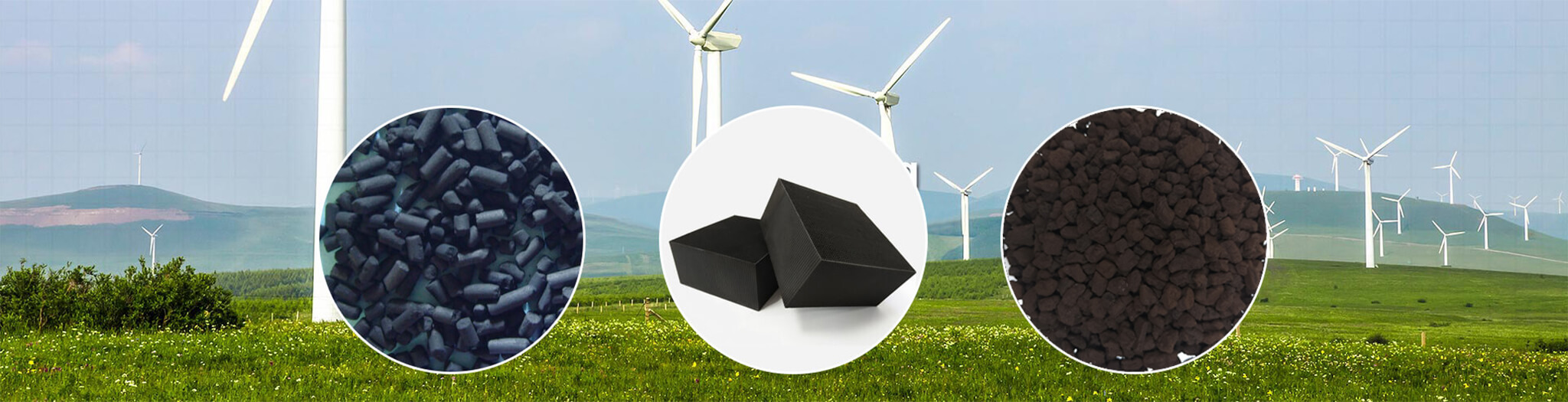
Electronic manufacturing cleanrooms commonly face the challenge of low-concentration ozone pollution, originating from multiple process steps including UV ozone cleaning, ozonated water cleaning, corona discharge equipment, and static eliminators in the cleanroom. China's Occupational Exposure Limits for Hazardous Agents in the Workplace – Part 1: Chemical Hazardous Agents (GBZ 2.1-2019) stipulates a maximum allowable concentration of 0.3 mg/m³ for ozone in the workplace; the U.S. Occupational Safety and Health Administration (OSHA) sets an 8‑hour time‑weighted average permissible exposure limit of 0.1 ppm (approximately 0.2 mg/m³), and the National Institute for Occupational Safety and Health (NIOSH) recommends a ceiling limit of 0.1 ppm, meaning that the concentration must not exceed this level at any time during the workday. Excessive ozone not only endangers the respiratory health of operators, but also accelerates aging of rubber seals and cable jackets, corrodes metal surfaces and electrical contacts, and affects the stability of precision electronic equipment. Among the three mainstream ozone abatement technologies – activated carbon adsorption, thermal decomposition, and catalytic decomposition – the catalytic decomposition method stands out as the preferred technical solution for low‑concentration, high‑airflow ozone treatment in electronic manufacturing cleanrooms due to its ambient‑temperature operation, zero energy consumption, and no secondary pollution. Proper catalyst selection – including active component system, specific surface area, mechanical strength, moisture resistance, and catalyst form – is the key to achieving long‑term, stable ozone control.
Ozone in electronic manufacturing cleanrooms does not come from a single source; rather, it results from the combined action of multiple processes and equipment.
This is one of the most significant sources. The process uses 185 nm short‑wavelength ultraviolet light to photolyze oxygen in the air to generate ozone, which then oxidizes organic contaminants on the surfaces of silicon wafers, hard disk platters, and organic light‑emitting display substrates. A study measured the working environment of a hard disk parts factory that used short‑wavelength UV to modify disk surface characteristics and found that the ozone concentration around the equipment exceeded 150 ppb. After the cleaning cycle, residual ozone in the chamber escapes into the cleanroom through the load and unload ports.
This process is also non‑negligible. In semiconductor manufacturing, ozonated water is used to remove photoresist residues and organic contaminants from silicon wafer surfaces. Ozonated water concentrations typically range from 2 to 20 ppm, and some processes may reach 50‑100 ppm. Ozone dissolved in water continuously off‑gases during circulation and drainage, with relatively higher concentrations near cleaning bath openings and drain outlets. The headspace of drain pipes that transport spent ozonated water may also inadvertently release ozone gas.
These are another important source. Corona discharge ionizes air under high voltage, dissociating oxygen molecules into reactive oxygen atoms, which then combine with oxygen molecules to form ozone. The more concentrated the discharge zone, the higher the voltage, and the greater the air involvement, the higher the ozone generation. This phenomenon is common in corona treatment, electrostatic precipitators, plasma surface treatment, and similar equipment.
Static eliminators mounted on the cleanroom ceiling may also contribute to ozone levels. Multiple static eliminators installed in the ceiling can generate ozone during operation due to sputtering, dust accumulation, or other factors.
As a strong oxidizer and irritant gas, ozone is subject to strict occupational exposure limits both domestically and internationally.
China's GBZ 2.1‑2019 standard specifies a maximum allowable concentration of 0.3 mg/m³ for ozone in workplace air. The U.S. OSHA permissible exposure limit is an 8‑hour time‑weighted average of 0.1 ppm (approx. 0.2 mg/m³), and NIOSH recommends a ceiling limit of 0.1 ppm. The American Conference of Governmental Industrial Hygienists (ACGIH) sets full‑shift occupational ozone exposure thresholds at 0.1, 0.08, and 0.05 ppm for light, moderate, and heavy work intensities, respectively.
In practice, electronic cleanrooms typically adopt ≤0.1 ppm as a safety reference for ozone residuals after disinfection. After ozone disinfection, the indoor concentration must drop below 0.1 ppm before personnel can safely return to the work area.
It is important to note that although ozone naturally decomposes into oxygen at ambient temperature with a half‑life of approximately 50 minutes, semiconductor cleanrooms are enclosed environments with limited air exchange rates, so natural dissipation is slow and active abatement measures are necessary.
Excessive ozone poses a dual threat to both personnel health and production quality.
These are the most direct effects. Ozone is a highly toxic irritant gas. When the ozone concentration exceeds 0.1 ppm, it can cause irritation of the nasal and throat mucosa. Studies indicate that the respiratory function response threshold in healthy non‑smokers is at or below 0.15 ppm. Ozone concentrations of 0.1‑0.2 mg/m³ can trigger asthma attacks and worsen upper respiratory tract diseases; levels above 2 mg/m³ may cause headache and chest pain. At 1 mg/L, ozone can accelerate breathing and cause chest tightness and palpitations; at 2.5‑5.5 mg/L, it can cause rapid pulse, coughing, headache, and in severe cases, impaired lung function. Long‑term exposure to ozone above the limits may also increase the risk of respiratory diseases.
This threat is equally significant. Ozone is corrosive to metals and also aggressively attacks non‑metallic materials. In the workshop environment, prolonged exposure to low‑concentration ozone accelerates aging of rubber seals and cable jackets, corrodes metal surfaces and electrical contacts. Studies have shown that if the electrodes of gallium nitride‑based semiconductor laser chips are exposed to ozone, performance degradation or shortened lifespan may occur. Ozone used for disinfection in clean areas can corrode equipment and electronic components, affecting the stability of precision electronic devices and reducing product yield.
This is another concern. Ozone is reactive and is considered an undesirable contaminant in semiconductor device manufacturing. Contaminants in the cleanroom can degrade the electrical performance of semiconductor wafers. The long‑term presence of low‑concentration ozone can also affect the stability of precision electronic equipment and lower product yield.
The mainstream methods for ozone treatment currently include activated carbon adsorption, thermal decomposition, and catalytic decomposition.
This method uses the porous structure of activated carbon to adsorb ozone molecules, during which ozone decomposes into oxygen on the carbon surface. The equipment is simple and initial investment is low. However, the adsorption capacity is limited, and activated carbon is consumed by reaction with ozone, potentially generating carbon monoxide or carbon dioxide. Studies have shown that when relative humidity drops from 50% to 30%, the single‑pass efficiency of fresh activated carbon filters at 70 ppb ozone decreases by about 6%, and the aging rate nearly doubles at 500 ppb. Humidity has a dual effect on activated carbon: water can promote the chemical reaction between ozone and carbon, but at high relative humidity it can block reactive sites on the carbon. Furthermore, activated carbon itself poses a risk of oxidative heating.
This method heats the ozone‑containing gas to 300‑400°C to provide sufficient energy for ozone molecules to decompose. The decomposition efficiency is high, but energy consumption is enormous, requiring specialized heating equipment and insulation, leading to high operating costs. Thermal decomposition is suitable for high‑concentration, low‑airflow industrial off‑gas treatment, but not for the low‑concentration, high‑airflow, continuous operation typical of cleanrooms.
This technique uses a catalyst to lower the activation energy of the ozone decomposition reaction, allowing it to proceed efficiently at ambient temperature and pressure. The catalyst decomposes ozone at room temperature without any additional energy input. Catalytic decomposition produces no secondary pollution, has extremely low energy consumption, and offers a long catalyst service life. For the low‑concentration (typically 1‑50 ppm), high‑airflow, continuous operation of electronic manufacturing cleanrooms, catalytic decomposition is superior to both adsorption and thermal methods in terms of mechanism, energy consumption, and engineering suitability.
| Abatement Technology | Principle | Suitable Application | Key Limitations |
|---|---|---|---|
| Activated Carbon Adsorption | Physical adsorption + surface reaction | Intermittent, low airflow | Easily saturated, humidity‑sensitive, fire risk, consumable |
| Thermal Decomposition | High‑temperature heating (300‑400°C) | High concentration, low airflow | Extremely high energy consumption, complex equipment, high operating cost |
| Catalytic Decomposition | Ambient‑temperature catalytic reaction | Low concentration, high airflow | Requires periodic catalyst replacement |
The working principle of catalytic decomposition is based on clear chemical reactions and materials science.
Ozone (O₃) undergoes catalytic decomposition on active sites on the catalyst surface, with the overall reaction: 2O₃ → 3O₂. Taking a copper‑manganese composite catalyst as an example, its main components are highly active manganese dioxide (MnO₂) and copper oxide (CuO). Manganese dioxide provides abundant active sites, while copper oxide enhances electron transfer capability; their synergistic effect significantly boosts catalytic activity and stability.
The decomposition process proceeds in three steps: first, ozone molecules adsorb onto active sites (such as Mn⁴⁺ and Cu²⁺) on the catalyst surface; second, the active sites donate electrons to the ozone molecules, causing them to decompose into oxygen atoms and oxygen molecules; finally, the oxygen atoms combine with other ozone molecules or oxygen atoms to form more oxygen molecules. Studies show that the copper‑manganese catalyst system exhibits good stability and high activity for ozone decomposition.
These advantages are evident in multiple dimensions:
Catalyst performance directly determines treatment effectiveness and service life. For the specific operating conditions of electronic manufacturing cleanrooms, the following points should be emphasized during selection:
Practical experience indicates that the manganese‑copper mixed oxide (MnO₂+CuO) system offers higher activity and better moisture resistance for ozone decomposition. Manganese dioxide provides abundant active sites, and copper oxide enhances electron transfer. Research shows that CuO‑modified catalysts exhibit better ozone decomposition activity than unmodified ones. The active component loading is a critical parameter affecting catalytic efficiency.
Specific surface area determines the contact efficiency between ozone and active sites, directly influencing the decomposition rate. Higher surface area means stronger ozone adsorption, larger reaction contact area, and higher catalytic efficiency. High‑quality catalysts should possess a high specific surface area to provide more active sites.
The catalyst must withstand long‑term airflow impact; insufficient mechanical strength can lead to particle breakage, attrition, and increased pressure drop. Honeycomb catalysts have a structural advantage in this regard – the monolithic structure eliminates inter‑particle friction and attrition. The compressive strength of honeycomb catalysts should meet certain standards to reduce breakage during transport and installation.
High‑humidity air competes for active sites and is one of the major challenges in ozone catalyst development. Water molecules and ozone molecules compete for adsorption on the catalyst surface; under high‑humidity conditions, accumulated moisture adsorption can block the catalytic reaction and occupy oxygen vacancies, leading to catalyst deactivation. Although electronic manufacturing cleanrooms typically have controlled temperature and humidity, the catalyst's stability under moderate humidity conditions still needs attention.
Honeycomb ozone decomposition catalysts are well‑suited for treating low‑concentration, high‑airflow ozone streams, offering low pressure drop, high decomposition efficiency, and easy installation. In high‑flow, low‑concentration scenarios such as cleanroom exhaust (ozone concentrations typically in the range of a few ppm to around 15 ppm, with airflow rates reaching tens of thousands of cubic meters per hour), honeycomb catalysts are preferred for their superior space velocity adaptability, typically in the range of 15,000‑50,000 h⁻¹, reducing equipment footprint and capital investment. The low pressure drop and energy‑saving features of honeycomb catalysts provide significant engineering advantages for large‑airflow applications. Compared with the 1,500‑2,000 Pa pressure drop that may occur in packed‑bed granular catalysts, the low‑resistance monolithic structure can significantly reduce fan energy consumption.
In addition, space velocity parameters deserve attention in engineering design. Increasing space velocity shortens gas residence time and reduces ozone removal efficiency. General test data show that when space velocity increases from 20,000 h⁻¹ to 40,000 h⁻¹, the ozone decomposition efficiency drops from approximately 98% to about 90%. Therefore, the appropriate space velocity range should be selected based on actual treatment airflow and target efficiency. For cleanroom low‑concentration, high‑airflow applications, a recommended space velocity range is 10,000‑50,000 h⁻¹. Additionally, upstream particulate filtration should be installed to prevent dust from clogging the catalyst channels.
The low‑concentration ozone problem in electronic manufacturing cleanrooms originates from multiple process sources including UV ozone cleaning, ozonated water cleaning, corona discharge equipment, and static eliminators. China's GBZ 2.1‑2019 standard sets a maximum allowable concentration of 0.3 mg/m³, while the U.S. OSHA and NIOSH both set occupational exposure limits at 0.1 ppm. Excessive ozone poses multiple threats to operator health, precision equipment lifetime, and product yield. Among the three mainstream abatement technologies – activated carbon adsorption, thermal decomposition, and catalytic decomposition – catalytic decomposition stands out as the preferred technical choice for low‑concentration, high‑airflow ozone treatment in cleanrooms due to its ambient‑temperature operation, zero energy consumption, and no secondary pollution. The manganese‑copper mixed oxide catalyst system shows outstanding activity, and the honeycomb form offers engineering advantages for high‑airflow conditions – low pressure drop significantly reduces energy consumption, while high space‑velocity adaptability minimizes equipment size. Proper catalyst selection – including active component system, specific surface area, mechanical strength, moisture resistance, and catalyst form – combined with scientific space velocity and bed design, is the key to achieving long‑term stable ozone control in cleanrooms. For electronic manufacturing enterprises, establishing a robust ozone concentration monitoring system and selecting an appropriate catalytic decomposition solution are not only necessary measures for protecting occupational health, but also important technical means to improve product quality and production stability.
author:Gloria
date:2026-09-03
Contact: Candyly
Phone: 18142685208
Tel: 0731-84115166
Email: minstrong@minstrongchina.com
Add: E2 Building, Kinglory Science And Technology Industrial Park, Wangcheng Area, Changsha, Hunan, China.