Language:



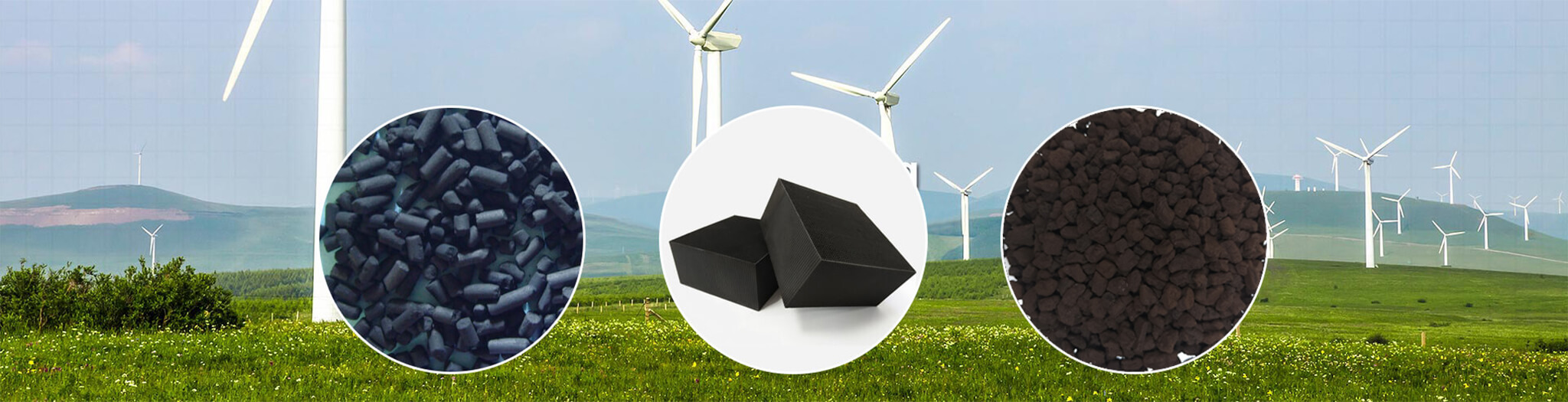
Active copper oxide (CuO) catalysts have drawn considerable attention in industrial waste gas carbon monoxide (CO) catalytic oxidation treatment due to their abundant resources, low cost, and excellent redox performance. Compared with supported noble metal catalysts (Pt, Pd, Au, etc.), the material cost advantage of copper‑based catalysts is obvious – the market price of metallic copper is roughly one‑thousandth that of platinum. However, the industrial application of copper‑based catalysts is constrained by insufficient low‑temperature activity and rapid deactivation under complex operating conditions. This article systematically reviews the applicable conditions and selection criteria for active copper oxide catalysts from three dimensions: catalytic performance parameters, typical industrial application scenarios, and operational limitations.
The CO oxidation performance of active copper oxide catalysts is highly dependent on the choice of support material. Different supports not only influence the dispersion state of the active component, but also regulate the electronic properties and oxygen mobility of copper species through metal‑support interactions, thereby altering the reaction pathways and kinetic parameters.
Kinetic studies show that the apparent activation energies of CuO/SiO₂, CuO/TiO₂, and CuO/CeO₂ catalysts are 74.8, 53.4, and 46.3 kJ/mol, respectively. This difference reflects the regulatory role of the support on the reaction pathway: the CuO/SiO₂ and CuO/TiO₂ systems follow the Langmuir‑Hinshelwood mechanism – CO and O₂ adsorb on different active sites and then react at the interface, with O₂ activation being the rate‑determining step; while the CuO/CeO₂ system follows the Mars‑van Krevelen mechanism – adsorbed CO directly reacts with lattice oxygen of CeO₂, and the concentration of oxygen vacancies on the support determines the reaction rate. The CuO/CeO₂ system exhibits the lowest activation energy and the best low‑temperature activity due to the superior oxygen storage/release capability of CeO₂.
In the CuO/TiO₂ system, the catalyst with 30 wt% CuO loading performs best: at a space velocity of 10,000 h⁻¹, complete CO oxidation can be achieved above 180°C; for an inlet CO concentration of 0.1–0.5 vol%, the CO conversion efficiency exceeds 95% in the temperature range of 220–420°C. In the temperature range of 150–180°C, the CO catalytic oxidation on this catalyst surface can be approximated as a first‑order reaction, with an activation energy of 24.23 kJ/mol.
The CuO‑CeO₂‑based catalyst exhibits even more prominent performance under model conditions – the CO light‑off temperature is about 70°C. At 95°C and a space velocity of 40,000 cm³·g⁻¹·h⁻¹, the CO conversion approaches 100% with a selectivity of 96% toward CO oxidation. By constructing a highly dispersed unsaturated Cu¹–O₃ coordination structure, the Cu¹O₃–CeO₂ catalyst increases the CO conversion from 12% (for conventional CuCeOx) to 90% at 66°C. The specific surface area of the catalyst also has a significant effect – active copper oxide with a specific surface area in the range of 180–240 m²/g, benefiting from abundant micropores that ensure mass transfer efficiency at high space velocities, exhibits markedly higher catalytic activity than samples with lower specific surface areas.
The ratio of Cu⁺ to Cu²⁺ in copper oxide is a key parameter determining CO oxidation activity. Temperature‑programmed reduction (H₂‑TPR) and X‑ray photoelectron spectroscopy (XPS) analyses indicate that catalytic activity is closely related to the reducibility of the catalyst. Studies show that a catalyst with a Cu⁺/Cu²⁺ ratio of about 5 has an apparent activation energy of only 80 ± 3.8 kJ/mol, whereas when the ratio drops to 0.01, the activation energy increases to 125 ± 6.8 kJ/mol. On CeO₂ supports, highly dispersed Cu⁺ species are considered the main active centers for low‑temperature CO oxidation.
Lime kiln exhaust gas has a relatively high CO content (about 2 vol%) and also contains about 35 vol% CO₂ along with some nitrogen/sulfur compounds and dust. The temperature of this stream is usually maintained at 150–200°C, with O₂ about 2 vol%, which is a relatively ideal operating condition for CuO‑based catalysts.
On a lime kiln production line, a CuO/CeO₂/γ‑Al₂O₃ industrial spherical catalyst was used in the exhaust treatment section. The catalyst loading was calculated accordingly, and the treatment gas flow was 1 m³/h (pilot scale). The inlet gas composition was 2 vol% CO, 2 vol% O₂, 35 vol% CO₂, balanced with N₂, and the reaction temperature was controlled at 150°C. The operating results showed that the catalyst achieved stable CO catalytic oxidation operation for over 350 hours under these conditions, with the outlet CO concentration consistently meeting the target. XRD phase analysis after operation showed no structural damage, and the active components remained well dispersed. This case demonstrates that the CuO/CeO₂/Al₂O₃ system can meet the continuous operation requirements of industrial units under moderate‑temperature, sulfur‑free, or pre‑desulfurized conditions.
In the application of hydrogen purification for fuel cells, CO must be selectively oxidized in a hydrogen‑rich atmosphere to reduce its concentration below 10×10⁻⁶, so as to avoid poisoning the platinum electrode of the proton‑exchange membrane fuel cell, while also avoiding excessive consumption of H₂. This application imposes very high selectivity requirements on the catalyst.
The CuO/CeO₂ catalyst can achieve selective PROX reaction in the temperature window of 50–100°C. At 95°C and a space velocity of 40,000 cm³·g⁻¹·h⁻¹, in a reaction atmosphere containing 1 vol% CO, 1 vol% O₂, and 50 vol% H₂ (balanced with N₂), the CO conversion approaches 100%, and the selectivity toward CO oxidation reaches 96%. In the temperature range of 140–160°C, some catalyst systems can reduce the CO concentration in the hydrogen‑rich gas to below 100×10⁻⁶.
The preparation method of the catalyst has a significant impact on PROX performance. In the CuO/CeO₂ catalyst prepared by coprecipitation, CuO is highly dispersed and embedded in the CeO₂ lattice, with more Cu⁺ and oxygen vacancies on the surface; whereas in the sample prepared by impregnation, CuO exists in a crystalline form. The former can achieve complete CO conversion over a relatively wide temperature window of 120–170°C, with the selectivity of O₂ toward CO oxidation reaching 99.9% at 120°C. However, it should be noted that when the temperature exceeds 130°C, although the CO conversion increases, the competitive oxidation rate of H₂ also increases significantly, leading to higher hydrogen source loss.
Sulfur poisoning is the most severe challenge facing the industrial application of active copper oxide catalysts. Industrial tail gases such as sintering flue gas and coke oven gas commonly contain SO₂, and the sensitivity of CuO‑based catalysts to sulfur severely limits their application in sulfur‑containing conditions.
Taking the CuO‑CeO₂ catalyst as an example, at a reaction temperature of 200°C and a space velocity of 15,000 h⁻¹, treating a feed gas containing 1 vol% CO and 1 vol% O₂, the initial CO conversion is 100%. When 30 ppm SO₂ is added to the feed gas, the catalyst activity begins to decline after 26 hours of operation and is completely deactivated after about 50 hours. The introduction of SO₂ causes the accumulation of SO₄²⁻ species on the catalyst surface, which cover the active sites of CuO and also react with CeO₂ to form Ce₂(SO₄)₃, destroying the oxygen storage/release function of CeO₂. The deactivation of sulfur‑poisoned catalysts is irreversible – even after cutting off SO₂ and purging with clean air at the same temperature, the activity cannot be restored.
In the CuO/TiO₂ system, as the SO₂ concentration in the flue gas increases from 0 to 4,000 mg/m³, the CO conversion shows a gradual decreasing trend. The sulfur resistance of catalysts prepared by different methods differs significantly: the solvothermal method outperforms the coprecipitation method, which in turn outperforms the impregnation method. For sulfur‑containing conditions, upstream desulfurization pretreatment is the fundamental measure to ensure normal operation of the catalyst; once sulfur poisoning occurs, regeneration is extremely difficult, and industrial practice usually involves direct replacement.
Water vapor is an inhibitor of CO oxidation. Studies show that water vapor dissociates on the catalyst surface to form hydroxyl groups, occupying active sites and oxygen vacancies, or forms CO‑H₂O surface complexes that block CO adsorption. The water‑induced deactivation effect on CuO/Al₂O₃ catalysts is reversible under operating conditions, but XPS analysis indicates that the introduction of water also causes changes in the valence state of surface copper species, oxidizing active Cu⁰ and Cu⁺ to Cu²⁺ species.
Temperature has a significant effect on the inhibitory effect of water vapor: below 200°C, competitive adsorption between water vapor and CO on active sites causes a decrease in reaction rate; when the reaction temperature rises above 225°C, the rate of water desorption accelerates, and the CO oxidation rate recovers to the level under dry conditions. By doping CuO/Al₂O₃ catalysts with CeO₂, the competitive adsorption of H₂O on active sites can be effectively suppressed, improving the activity retention of the catalyst in humid atmospheres by about 30%.
Active copper oxide catalysts have insufficient O₂ activation ability in the low‑temperature range (<100°C), resulting in poor CO oxidation performance. The medium‑temperature range (100–420°C) is the main industrial application temperature window. When the temperature exceeds 400°C, CuO crystallites sinter, specific surface area decreases, active sites are reduced, leading to irreversible deactivation. In H₂ or CO atmospheres, CuO is easily reduced to metallic copper below 250°C, with copper crystallites growing and activity being lost.
In engineering applications, the bulk density of the catalyst directly affects the loading amount and equipment size for a given gas flow rate. The loose bulk density of active copper oxide catalysts is typically in the range of 0.68–0.70 g/cm³. Under the same treatment conditions, a catalyst with a higher bulk density means a larger single‑charge loading and higher equipment weight requirements, but the total number of active sites provided per unit volume of the reaction bed also increases accordingly. The design should take into account space velocity, pressure drop, and bed height for comprehensive calculation.
Industrial tail gas with temperature between 100 and 420°C, containing O₂ (usually >1 vol%), CO concentration in the range of 0.1–0.5 vol%, and either free of SO₂ or with upstream desulfurization completed. Typical scenarios include lime kiln tail gas treatment (150°C, stable operation >350 h), natural gas boiler tail gas treatment, and PROX reaction in hydrogen‑rich atmospheres (50–170°C). For higher CO concentrations (>2 vol%), staged gas admission or thermal management measures should be adopted to control bed temperature rise.
Sintering flue gas containing SO₂ – copper‑based catalysts are highly sensitive to sulfur, so sulfur‑resistant modified systems or upstream wet/dry desulfurization units are required. Low‑temperature (<100°C) humid atmospheres – insufficient O₂ activation ability and significant water inhibition effect make it difficult to meet industrial requirements. High‑temperature (>400°C) tail gas – thermal sintering risk exists, so a heat exchanger for cooling or selection of other high‑temperature‑resistant catalytic materials is necessary. Strongly reducing atmospheres (high concentration of H₂ or hydrocarbons) – CuO is easily reduced to metallic copper and deactivated.
Choose the appropriate catalyst system based on parameters such as exhaust temperature, humidity, SO₂ content, CO concentration, and space velocity. For sulfur‑containing conditions, upstream desulfurization is a prerequisite for normal operation; sulfur poisoning is irreversible and requires replacement. For humid conditions, doping modification with CeO₂ can improve moisture resistance, or the reaction temperature can be maintained above 225°C to mitigate the water inhibition effect. It is recommended to conduct side‑stream pilot tests to verify catalyst performance and lifetime under real operating conditions before industrial application, with a test period of no less than 500 hours to obtain reliable deactivation rate data. For deactivated catalysts: sulfur poisoning is irreversible and requires replacement; water inhibition can be alleviated by increasing temperature or modification; reduction deactivation can be recovered by re‑oxidation; thermal sintering is irreversible and requires replacement.
author: Gloria
date:2026/8/25
Contact: Candyly
Phone: 18142685208
Tel: 0731-84115166
Email: minstrong@minstrongchina.com
Add: E2 Building, Kinglory Science And Technology Industrial Park, Wangcheng Area, Changsha, Hunan, China.