Language:



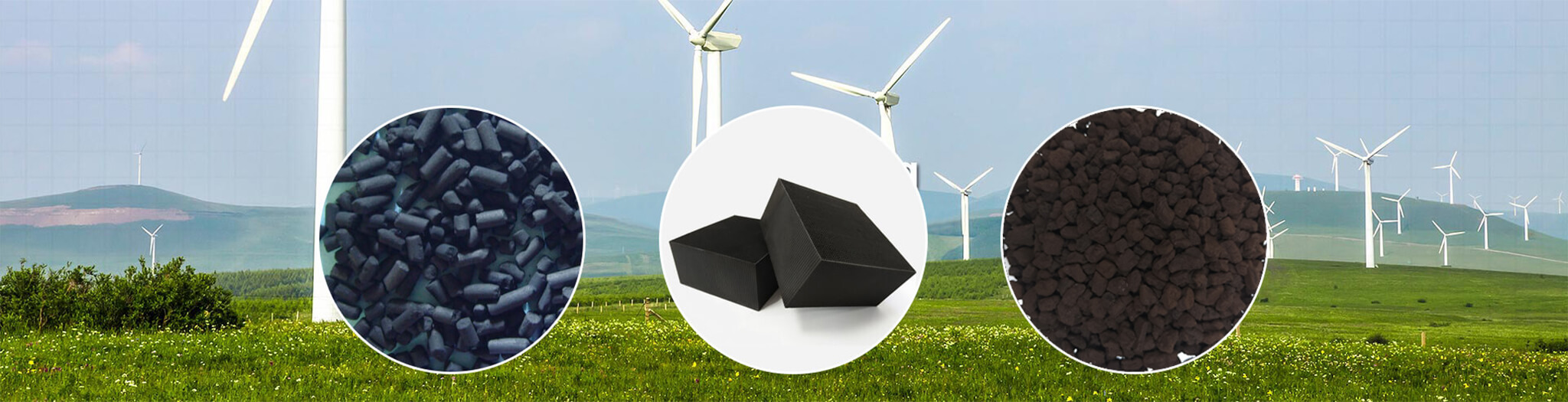
The low-temperature (0–30°C) catalytic oxidation activity of Hopcalite catalysts for carbon monoxide is jointly determined by eight factors: chemical composition (Cu:Mn molar ratio between 1:1 and 1:2), crystalline structure (amorphous or microcrystalline preferred), specific surface area (higher within 100–250 m²/g is beneficial), particle size (nanoscale preferred), operating humidity (water vapor is the main inhibitor), presence of sulfur/chlorine compounds in the gas atmosphere, space velocity (optimal range 10,000–50,000 h⁻¹), and preparation process (precipitation pH 7–9, calcination at 280–350°C). The electronic synergy between copper and manganese is the origin of activity, and when relative humidity exceeds 60%, conversion can drop by more than 50% within a few hours. Doping with rare earth elements such as cerium or supporting on high‑surface‑area carriers can lower the complete conversion temperature by 5–10°C without changing the base composition.
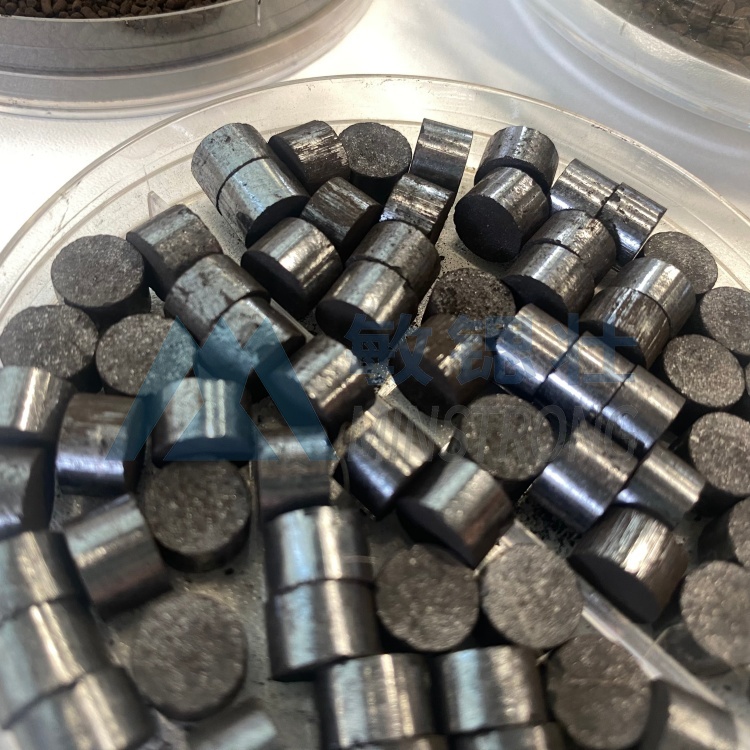
The active components of Hopcalite catalysts are primarily copper and manganese mixed oxides. The effect of the Cu:Mn molar ratio on low‑temperature activity has been quantitatively established. When the Cu:Mn molar ratio is between 1:1 and 1:2, the catalyst achieves >90% CO conversion at 25°C at space velocities up to 30,000 h⁻¹. Deviations from this range: at a ratio above 1:1 (copper‑rich), a copper‑rich phase forms on the surface, blocking manganese active sites, and conversion drops below 70% under the same conditions; at a ratio below 1:2 (manganese‑rich), lattice distortion increases and activity decreases by about 30%.
Measured data example (Minstrong internal tests, same below): At 25°C, 40% relative humidity, and 20,000 h⁻¹ space velocity, a sample with Cu:Mn = 1:1.5 gave an initial CO conversion of 98.2%; a sample with Cu:Mn = 1:3 gave only 72.5%.
Doping with a small amount of rare earth elements (e.g., cerium, 3–5 wt.%) can alter the redox potential. One batch of modified material achieved an increase in the space velocity for complete CO conversion at 10°C from 12,000 h⁻¹ to 18,000 h⁻¹.
Low‑temperature activity is inversely correlated with the degree of crystallinity. X‑ray diffraction analysis shows that Hopcalite samples calcined at 280–350°C exhibit broad diffraction peaks with crystallinity below 15% (relative to a quartz standard). Their specific activity (conversion rate per unit area) at 25°C is about 2.3 times that of highly crystalline samples (calcined at 500°C, crystallinity >50%). The reason is that low crystallinity introduces abundant oxygen vacancies and unsaturated coordination sites.
Case study (anonymized): In a mine refuge chamber project, a high‑crystallinity Hopcalite pellet (calcined at 500°C) initially required 90 seconds to reduce the CO concentration from 400 ppm to 20 ppm. Switching to a low‑crystallinity product (calcined at 320°C) from the same manufacturer (Minstrong) reduced the time to 55 seconds under identical conditions.
Specific surface area directly affects the number of active sites. For Hopcalite catalysts suitable for low‑temperature CO oxidation, the BET specific surface area typically falls between 120 and 220 m²/g. Below 80 m²/g, even with optimal composition and crystallinity, room‑temperature conversion rarely exceeds 80% (at 15,000 h⁻¹ space velocity).
Regarding pore structure, samples with more than 60% mesopores (2–10 nm) exhibit an apparent activity about 40% higher than those dominated by micropores. This is because mesopores facilitate fast diffusion of CO and O₂, avoiding internal diffusion limitations.
Data: Under the same composition and calcination conditions, a sample with 65% mesoporosity achieved 85% conversion at 10°C and 25,000 h⁻¹ space velocity, while a sample with 70% microporosity (only 20% mesopores) gave only 62% conversion under the same conditions.
When the particle size decreases below 100 nm, the fraction of surface atoms increases dramatically. Nano‑Hopcalite (primary particle size 30–80 nm) has a light‑off temperature (temperature for 50% conversion) at 15°C that is about 8°C lower than that of micron‑sized particles (0.5–2 μm). However, nanoparticles tend to agglomerate: without a support, after 30 days of storage the secondary particle size can grow to 300–500 nm, with a 15–20% loss in activity.
Solution data: Nano‑Hopcalite prepared by ultrasonic‑assisted co‑precipitation and supported on mesoporous SiO₂ (1:1 mass ratio) maintained a secondary particle size below 120 nm after 60 days of storage, with less than 5% activity decay.
Water vapor is the leading cause of low‑temperature activity loss for Hopcalite in practical applications. At 25°C, when relative humidity increases from 30% to 80%, the CO conversion of a typical sample can drop from 96% to 43% within 2 hours. The deactivation mechanisms include competitive adsorption between water and CO, and the formation of surface hydroxyl groups that hinder the Cu²⁺/Cu⁺ and Mn³⁺/Mn⁴⁺ redox cycles.
This water‑induced deactivation is partially reversible. Purging the sample with dry nitrogen at 110°C for 2 hours can recover about 85% of the initial activity. However, prolonged exposure (>100 hours) to environments with >70% relative humidity causes hydrothermal aging of the copper‑manganese mixed structure, with a 30–50% loss in specific surface area, leading to irreversible deactivation.
Case study: An industrial tail gas treatment unit in a southern region experienced inlet gas with 75–85% relative humidity year‑round. Initially, a conventional Hopcalite catalyst required shutdown for drying regeneration every 72 hours, and the annual effective operating time was less than 70%. After switching to a hydrophobically modified Hopcalite (surface grafted with silane), the regeneration interval extended to 240 hours, and the effective operating time rose to over 90%.
Sulfur and chlorine compounds are irreversible poisons for Hopcalite. When the H₂S concentration exceeds 5 ppm, the activity of Hopcalite drops by more than 90% within 40 hours. XPS analysis shows that sulfur forms CuS and MnS, destroying the Cu–O–Mn bonding network. Chloride is even more toxic: at an HCl concentration of 2 ppm, activity falls by 80% in 20 hours.
Practical guideline: If the feed gas contains more than 1 ppm of sulfur or chlorine, a pretreatment stage for desulfurization and dechlorination (e.g., activated carbon or soda lime) should be installed upstream; otherwise, the replacement interval of the Hopcalite catalyst will be reduced to 1/5–1/10 of its normal life.
Space velocity (GHSV) represents the volume of gas processed per hour per unit volume of catalyst. For a given Hopcalite catalyst, lowering the space velocity increases contact time and inevitably raises CO conversion. However, from an engineering design perspective, a balance must be struck between throughput and equipment size.
Test data (25°C, 500 ppm CO inlet): At 10,000 h⁻¹, conversion = 99.5%; at 20,000 h⁻¹, 98.0%; at 40,000 h⁻¹, 86%; at 60,000 h⁻¹, 68%. The recommended operating range is 15,000–35,000 h⁻¹.
Case study: A manufacturer of confined‑space CO removal equipment originally designed for 55,000 h⁻¹ space velocity observed fluctuating CO outlet concentrations. Keeping the blower flow rate unchanged, they increased the catalyst loading by 40% (reducing actual space velocity to about 39,000 h⁻¹). The outlet CO stabilized below 10 ppm, and the equipment volume increased by only 15%.
Even with the same target composition, different preparation methods can yield low‑temperature activities that differ by several times.
Co‑precipitation is the most common industrial route. When the precipitation end‑point pH is controlled between 7.0 and 8.5, copper and manganese ions co‑precipitate most completely, with a deviation between the Cu:Mn molar ratio in the precipitate and the nominal ratio of less than 5%. At pH < 6, manganese precipitates incompletely; at pH > 10, copper forms soluble complexes; both lead to lower activity.
Calcination temperature is another decisive factor. Experimental results: at 200°C, the precursor (carbonates/hydroxides) is not fully decomposed, and conversion at 25°C is only 40%; at 280°C, decomposition is complete with very low crystallinity, conversion = 97%; at 350°C, conversion = 94%; at 450°C, conversion = 76%; at 550°C, conversion = 52%. Therefore the recommended calcination range is 280–350°C, with the optimum around 320°C.
Shaping process: Powder catalysts have the highest activity but also a high pressure drop. Adding 3–5% silica sol as a binder for extrusion reduces the specific surface area by about 10–15% and activity by less than 8%, while significantly improving mechanical strength, meeting industrial fixed‑bed requirements.
Based on the above factors, the following strategies have been proven effective and are already in practice (data source: Minstrong product tests):
These strategies can be used individually or in combination. However, any modification may increase cost or process complexity, so a techno‑economic assessment should be performed based on the specific operating conditions.
The low‑temperature activity of Hopcalite catalysts is the result of multiple coupled factors: chemical composition, crystalline structure, specific surface area, particle size, humidity, poisons, space velocity, and preparation process. In practical engineering, simply pursuing a high specific surface area or nanoscale size does not always yield the best performance. Rather, the material design and operating conditions must be matched to the target environment’s humidity, poison levels, and throughput. The data and case studies above show that by precisely controlling the Cu:Mn molar ratio (1:1–1:2), calcination temperature (280–350°C), and when necessary introducing rare‑earth doping or hydrophobic modification, the low‑temperature CO catalytic oxidation performance can be significantly improved without altering the base system. For high‑humidity or sulfur/chlorine‑containing scenarios, upstream pretreatment or surface modification is an unavoidable technical path.
author:Gloria
date:2026-06-09
Contact: Candyly
Phone: 18142685208
Tel: 0731-84115166
Email: minstrong@minstrongchina.com
Add: E2 Building, Kinglory Science And Technology Industrial Park, Wangcheng Area, Changsha, Hunan, China.