Language:



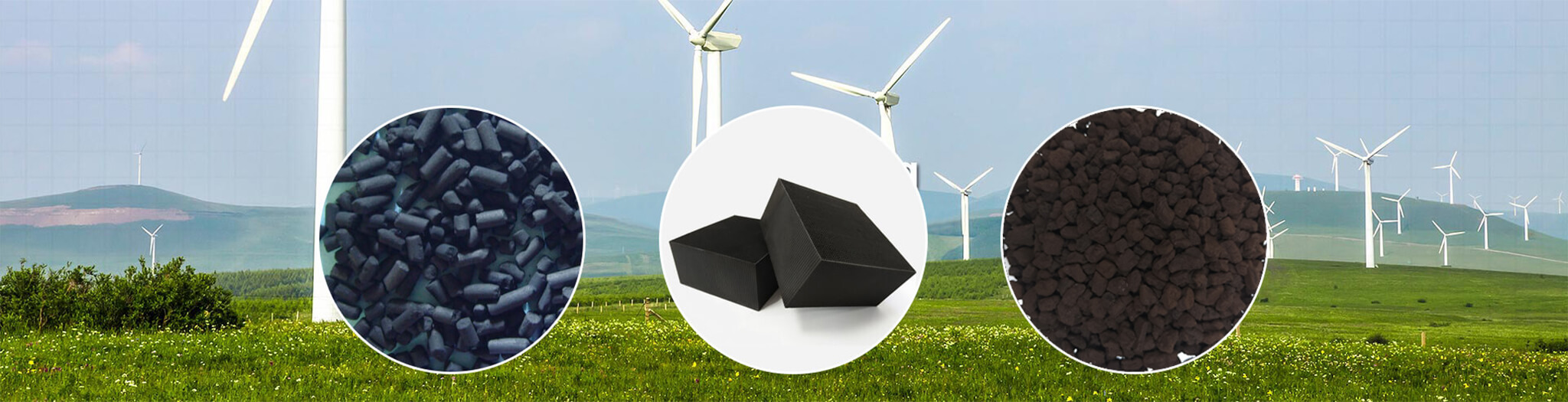
So, how can we overcome the low-temperature bottleneck and improve the catalytic activity of ozone catalysts under cold conditions? The industry is currently pursuing breakthroughs in the following four directions.
The material is the "heart" of the catalyst. The primary strategy to improve low-temperature activity is to precisely modify the catalyst itself.
Transition metal oxides such as manganese, iron, cobalt, and cerium exhibit unique ozone decomposition capabilities at low temperatures. Among them, Mn–Ce (manganese‑cerium) mixed oxides have been proven to maintain a high yield of ·OH (hydroxyl radicals) at low temperatures of 5–10°C, thanks to their excellent electron transfer ability and abundant oxygen vacancies. Experimental data show that at a Mn/Ce molar ratio of 1:1, the low-temperature catalytic efficiency is increased by more than 40% compared to single oxides.
Loading trace amounts of platinum (Pt), palladium (Pd), or gold (Au) onto the catalyst surface can significantly increase the concentration of oxygen vacancies and lower the activation energy for ozone decomposition. Studies indicate that with a Pt loading of only 0.5% (by mass), the conversion efficiency of ozone to reactive oxygen species at 5°C can reach more than 80% of the level achieved at room temperature (25°C). Although noble metals are relatively expensive, their very low dosage and recyclability have led to gradual adoption in high‑end applications.
Surface functional groups such as hydroxyl (-OH) and carboxyl groups are the direct active sites for ozone decomposition. Treatments including acid treatment, plasma modification, or chemical grafting can greatly increase the density of these groups. For example, after nitric acid oxidation of an activated carbon‑based catalyst, the surface hydroxyl content increases by about 60%, and the removal rate of recalcitrant organics such as oxalic acid at low temperature nearly doubles.
The support not only disperses the active components but also directly affects mass transfer and resistance to low‑temperature water film coverage.
Supports such as activated carbon, zeolites (e.g., ZSM‑5), and mesoporous silica (e.g., SBA‑15) possess high specific surface area and abundant pore structures. Under low‑temperature conditions, they can employ an adsorption‑catalysis coupling mechanism to pre‑concentrate organics near the active sites, compensating for the kinetic limitations. In particular, the ordered pore sizes (2–50 nm) of mesoporous materials facilitate ozone diffusion and avoid mass transfer resistance caused by micropore blockage.
At low temperatures, water films tend to condense on the catalyst surface, hindering contact between ozone and active sites. By adopting fluorination treatment, silane coupling agent grafting, or similar techniques, the catalyst surface can be rendered moderately hydrophobic. Research shows that when the water contact angle is increased from 20° to about 90°, the stable operation time of the catalyst at 5°C is extended by more than three times. Of course, excessive hydrophobicity can also weaken interfacial reactions, so a precise balance is needed in engineering practice.
Without replacing the catalyst, optimizing operating conditions and system integration is also a highly effective and low‑cost strategy.
Changing from traditional single‑point dosing to staged dosing or microbubble‑assisted dosing can significantly improve ozone dissolution and dispersion in the liquid phase. Moderately increasing the ozone concentration at low temperatures (e.g., from 10 mg/L to 15 mg/L) also helps compensate for the reduced reaction rate. A real engineering case shows that using a microbubble + ozone catalysis process, the COD removal rate of printing and dyeing wastewater remains above 75% even at a water temperature of 10°C, which is 25 percentage points higher than that of conventional aeration.
Combining ultraviolet (UV) light or ultrasound (US) with ozone catalysis has been proven to produce synergistic effects. UV promotes the photolysis of ozone to generate more ·OH, while the cavitation effect of ultrasound enhances liquid‑phase mass transfer and cleans the catalyst surface. For industrial sites with low‑grade waste heat (e.g., cooling water or flue gas waste heat), using a simple heat exchanger to raise the water temperature to 15–20°C is also an economically feasible solution.
Looking ahead, several emerging directions will bring breakthrough progress in low‑temperature ozone catalysis. Single‑atom catalysts disperse noble metals as individual atoms on a support, achieving nearly 100% atomic utilization and promising to maintain high activity even below freezing. Bio‑inspired catalytic materials (e.g., artificial metalloenzymes that mimic enzyme active centers) draw inspiration from cold‑tolerant enzymes found in nature. Machine learning‑assisted screening can rapidly identify the most suitable low‑temperature formulations from thousands of metal combinations and preparation methods, drastically shortening the R&D cycle.
Low temperature is no longer an insurmountable "restricted zone" for ozone catalytic oxidation technology. From the microscopic design of material modification, through engineering optimization of supports and operating conditions, to the exploration of cutting‑edge materials, multiple technical paths are advancing in parallel. It is foreseeable that customized ozone catalysts designed for cold regions and winter operation will become the next hot spot in the water treatment and off‑gas treatment markets. For environmental engineering companies, being the first to master low‑temperature enhancement technology means gaining a competitive edge in northern markets and winter projects.
author:Gloria
date:2026-06-02
Contact: Candyly
Phone: 18142685208
Tel: 0731-84115166
Email: minstrong@minstrongchina.com
Add: E2 Building, Kinglory Science And Technology Industrial Park, Wangcheng Area, Changsha, Hunan, China.