Language:



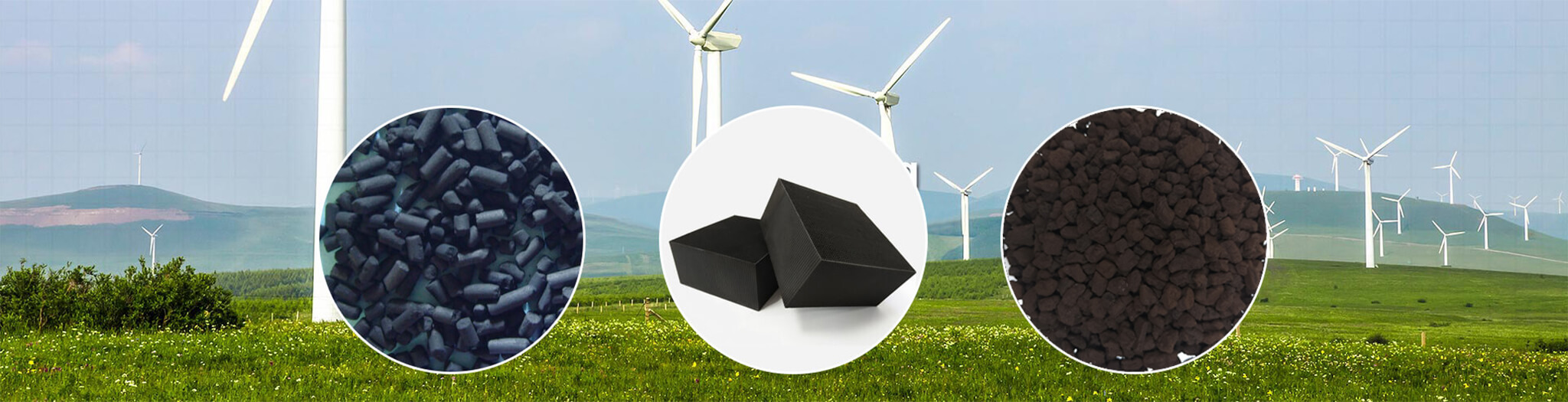
The core difference between manganese dioxide and copper-manganese composite catalysts in ozone decomposition lies in their moisture resistance and long-term stability. Manganese dioxide relies solely on limited surface oxygen vacancies and performs well under dry conditions, but rapidly deactivates in high-humidity environments due to competitive adsorption of water molecules and accumulation of intermediate oxygen species. Copper-manganese composite catalysts, by incorporating copper species to construct a bimetallic synergistic system, achieve complementary dual active sites, dynamic regeneration of oxygen vacancies, and significantly improved moisture resistance. They maintain a stable ozone decomposition efficiency above 90% even at a relative humidity of 85%. Therefore, economical manganese dioxide is suitable for dry, simple operating conditions, while copper-manganese composite catalysts are necessary for complex scenarios involving high humidity, high space velocity, and long-term continuous operation.
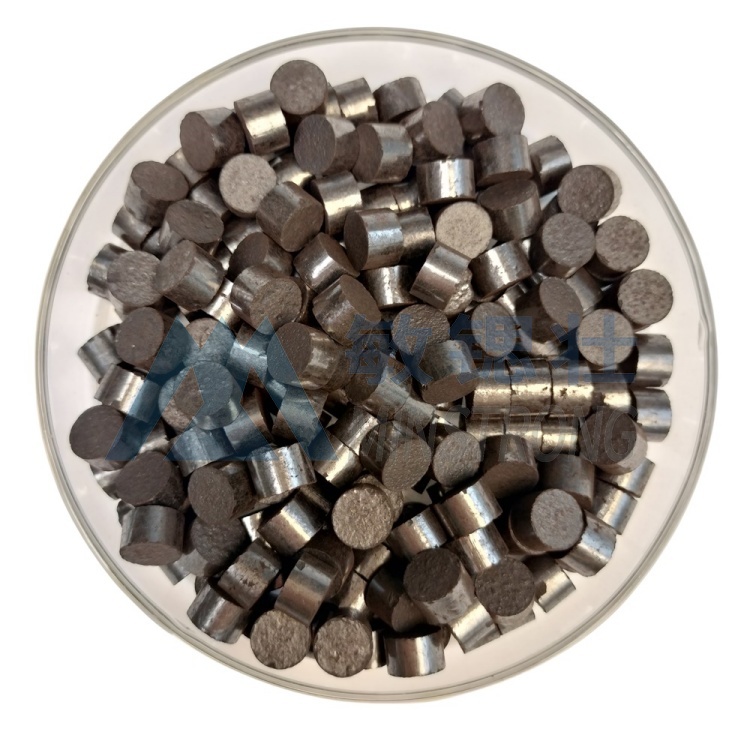
Manganese dioxide (MnO₂) is the most widely studied single-component catalyst for ozone decomposition. Its catalytic activity originates from oxygen vacancies on the crystal surface — structural defects formed by missing oxygen atoms in the lattice. When an ozone molecule adsorbs onto an oxygen vacancy, the vacancy injects electrons into the antibonding orbital of ozone, promoting O-O bond cleavage to generate an oxygen molecule and a surface-adsorbed active oxygen species (such as superoxide or peroxide). This active oxygen species can then react with a second ozone molecule to form two oxygen molecules or desorb from the surface, completing the catalytic cycle. Among various manganese oxides, manganese dioxide exhibits the highest intrinsic activity due to its moderate Mn-O bond energy and abundant defect structures.
However, manganese dioxide faces three inherent limitations in practical applications. First, limited density of active sites. The surface oxygen vacancy concentration of unmodified manganese dioxide is naturally insufficient, restricting the number of reaction sites per unit mass of catalyst, especially resulting in low initial reaction rates at low temperatures. Second, competitive adsorption of water molecules is a prominent issue. Water molecules and ozone molecules both tend to occupy oxygen vacancies, and the adsorption energy of water on manganese sites is generally higher than that of ozone. When relative humidity exceeds 50%, water molecules preferentially occupy the active sites, forming a hydration layer that hinders ozone access, leading to a rapid decline in catalytic activity. When relative humidity reaches above 80%, the activity can drop to less than 30% of its initial value within a few hours, and this deactivation is often irreversible. Third, accumulation of intermediate oxygen species leads to oxygen poisoning. During ozone decomposition, peroxide groups (O₂²⁻) or superoxide groups (O₂⁻) are continuously generated on the surface. These species stably adsorb near oxygen vacancies and block the active sites, making them difficult to remove even after stopping ozone flow. To address these issues, researchers have attempted methods such as solid-state synthesis, acid treatment, and mesoporous structure design to increase specific surface area and oxygen vacancy concentration. However, these approaches cannot fundamentally solve the water competition adsorption problem. Therefore, in high‑humidity practical environments, the long‑term operational stability of single-component manganese dioxide fails to meet engineering requirements.
Copper‑manganese composite catalysts are typically prepared by co‑precipitation, hydrothermal, or sol‑gel methods, forming a composite phase of MnO₂ and CuO or a Cu‑Mn‑O solid solution. The introduction of copper is not a simple superposition of the two oxides but produces significant synergistic effects through chemical interactions, achieving performance breakthroughs in three aspects.
First, complementary dual active sites. In copper‑manganese composite catalysts, the manganese dioxide component provides oxygen vacancies responsible for ozone adsorption and activation; the copper species (in the form of CuO or Cu₂O) provide Cu²⁺/Cu⁺ redox pairs with excellent electron conductivity. The copper sites act as electron “relay stations,” accelerating electron transfer from the catalyst to ozone molecules while promoting rapid desorption of surface active oxygen species, preventing their accumulation on manganese sites. Second, enhanced dynamic regeneration of oxygen vacancies. In single-component manganese dioxide, once an oxygen vacancy is occupied by an intermediate oxygen species, it is difficult to regenerate spontaneously. In the copper‑manganese composite system, copper sites convert adjacent peroxide species on manganese sites into oxygen and release them through a reversible redox cycle, enabling in‑situ regeneration of oxygen vacancies and significantly extending catalyst life. Third, optimized surface chemical environment. Copper ions inhibit excessive grain growth of manganese oxides, keeping the catalyst with smaller particle size and higher specific surface area. Additionally, the adsorption behavior of water molecules on copper sites differs from that on manganese sites — water molecules are more prone to dissociative adsorption on copper sites to form hydroxyl groups, which can either participate in ozone decomposition reactions or desorb quickly, thereby reducing long‑term occupation of oxygen vacancies by water.
Moisture resistance is the most prominent advantage of copper‑manganese composite catalysts over manganese dioxide. Experimental data show that a copper‑manganese composite catalyst prepared by co‑precipitation maintains a stable ozone conversion rate above 91% after 12 hours of continuous operation under conditions of 85% relative humidity and high gas hourly space velocity. In contrast, unmodified manganese dioxide under the same test conditions sees its conversion rate drop to below 60% after only 2 hours. This significant difference indicates that copper‑manganese composite catalysts can be directly applied to humid air without dehumidification, while manganese dioxide requires expensive pre‑dehumidification equipment. Currently, professional catalytic material companies including Minstrong have developed series of manganese‑based and copper‑manganese composite catalyst products for different humidity conditions.
The performance differences between the two catalysts are systematically described below from five key dimensions.
Manganese dioxide relies solely on oxygen vacancies as its single type of active center, and the site density is limited by the synthesis method and surface defect concentration. Copper‑manganese composite catalysts possess two types of active centers — oxygen vacancies and copper ion sites — which are spatially adjacent to each other, forming a synergistic “dual‑center” system. Consequently, for the same mass, the copper‑manganese composite catalyst provides significantly more effective reaction sites and a higher initial reaction rate.
Manganese dioxide follows a pure oxygen‑vacancy electron transfer pathway. The active oxygen species generated after ozone decomposition stably adsorb near the oxygen vacancies and are difficult to desorb quickly, leading to oxygen poisoning deactivation. Copper‑manganese composite catalysts exhibit a stepwise synergistic mechanism: ozone first adsorbs onto the oxygen vacancy of a manganese site and undergoes initial decomposition; the resulting active oxygen species rapidly migrates to a neighboring copper site, where the copper promotes further conversion of the species into oxygen and desorption through the Cu²⁺/Cu⁺ cycle, while simultaneously regenerating the oxygen vacancy on the manganese site. This process makes the entire catalytic cycle smoother and greatly reduces the deactivation rate.
Manganese dioxide is highly sensitive to water molecules; its activity drops significantly when relative humidity exceeds 50%, and it essentially fails within a few hours under high‑humidity conditions. Copper‑manganese composite catalysts exhibit excellent moisture resistance. Even at 85% relative humidity, water molecules mainly adsorb onto copper sites and dissociate or desorb quickly, leaving oxygen vacancies available for ozone decomposition. Therefore, they can maintain conversion rates above 90% for extended periods under high humidity.
Manganese dioxide performs well for short‑term operation under dry conditions, but after several hours of operation under high humidity or continuous running, its performance degrades markedly due to the combined effects of water competitive adsorption and accumulation of intermediate oxygen species, and recovery is difficult. Copper‑manganese composite catalysts, leveraging the improved oxygen mobility, reversible water adsorption characteristics, and dynamic regeneration mechanism of oxygen vacancies enabled by copper, have significantly longer service lives and much lower performance decay rates than manganese dioxide.
Manganese dioxide is suitable for dry gas treatment scenarios that require strict dehumidification, such as downstream industrial waste gas pretreatment and laboratory ventilation systems, where its preparation process is mature and cost is low. Copper‑manganese composite catalysts are more appropriate for air purification systems in underground parking garages, road tunnels, aircraft cabins, ship compartments, and coastal high‑humidity areas. Although their preparation cost is slightly higher than that of ordinary manganese dioxide, considering their reliable operation under high‑humidity conditions and longer replacement cycles, the overall cost‑effectiveness is superior.
Based on the performance differences described above, the following recommendations are provided according to specific operating conditions:
Conclusion: Manganese dioxide is economical and effective under dry conditions, but its performance deteriorates sharply in humid environments. Copper‑manganese composite catalysts, through copper‑manganese synergy, significantly improve moisture resistance, stability, and oxygen vacancy regeneration capability, making them the preferred choice for high‑humidity, long‑duration operation scenarios. Actual selection should consider humidity, operating time, and cost comprehensively to achieve the best ozone decomposition performance and economic benefit.
author:Gloria
date:2026-05-20
Contact: Candyly
Phone: 18142685208
Tel: 0731-84115166
Email: minstrong@minstrongchina.com
Add: E2 Building, Kinglory Science And Technology Industrial Park, Wangcheng Area, Changsha, Hunan, China.