Language:



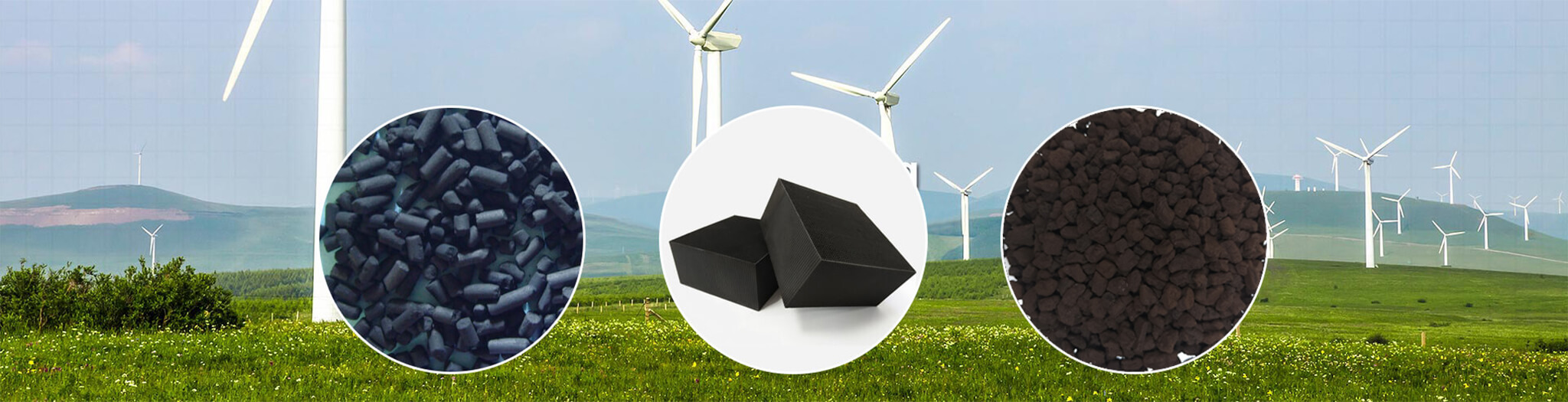
Hopcalite catalyst, with its advantages of high efficiency at room temperature, no need for external energy, rapid response, and significant cost-effectiveness, has become the core purification material for carbon monoxide protective equipment such as gas masks, mining self-rescuers, and refuge chambers. Its catalytic performance directly determines the reliability and safety of the protective equipment. Understanding its working principle, mastering key performance indicators, and properly addressing influencing factors like humidity are the central topics in the design and selection of protective equipment.
Carbon monoxide (CO) is a colorless, odorless, and non‑irritating highly toxic gas. Its affinity for hemoglobin is about 240 to 250 times that of oxygen. When the CO volume concentration in air reaches 0.1%, exposure for about 30 minutes can cause loss of consciousness or even death. In scenarios such as underground mines, fire scenes, enclosed compartments, and chemical production, CO can easily accumulate, posing a direct threat to the life safety of workers.
Traditional methods for removing carbon monoxide rely mainly on physical adsorption, but CO molecules have low polarity and are chemically stable, making them difficult to be effectively captured by adsorbents like activated carbon. Chemical conversion—namely catalytic oxidation—becomes the fundamental approach to eliminating CO. The core of catalytic oxidation technology lies in the selection and performance of catalytic materials.
Hopcalite catalyst was jointly developed in 1918 by Johns Hopkins University and the University of California, and its name is derived from the combination of the two school names. After more than a century of development, Hopcalite catalyst, with its unique room‑temperature catalytic performance, remains an irreplaceable core material in the field of carbon monoxide protection.
Hopcalite catalyst is a non‑noble metal catalytic material composed of active manganese dioxide (MnO₂) and copper oxide (CuO). The classic binary formulation has a mass ratio of approximately MnO₂:CuO = 3:2 or 2:3. To improve moisture resistance or thermal stability, quaternary formulations with added cobalt oxide (Co₃O₄) or a small amount of silver (Ag) are also used industrially.
The core reaction formula for CO oxidation catalyzed by Hopcalite is:
2CO + O₂ → 2CO₂
Without a catalyst, this reaction requires temperatures above 200°C to proceed significantly. Hopcalite catalyst significantly reduces the activation energy for the reaction between CO and O₂ through electron transfer between Mn⁴⁺/Mn³⁺ and Cu²⁺ as well as the participation of lattice oxygen, allowing CO to be rapidly converted to CO₂ in the temperature range of ‑20°C to 50°C.
The catalytic process consists of three key steps: CO molecules adsorb onto the active sites on the catalyst surface; the adsorbed CO reacts with lattice oxygen to form CO₂ and desorb; gas‑phase O₂ fills the oxygen vacancies to restore catalyst activity. In theory, the catalyst is not consumed; performance degradation mainly stems from water vapor poisoning, dust accumulation, or thermal sintering.
High‑quality Hopcalite catalyst possesses the following key characteristics:
| Performance Indicator | Typical Parameter |
|---|---|
| Specific Surface Area (BET) | 180‑240 m²/g |
| Active Component Content | ≥80% (granular), ≥99% (powder) |
| Mechanical Strength | Average crushing strength >45 N/cm |
| Bulk Density | Approx. 0.7 g/ml |
| Operating Temperature Range | ‑20°C to 50°C (up to 150°C for short periods) |
| Single‑Pass CO Conversion | >99% (under dry, clean conditions) |
The high specific surface area provides abundant reaction sites. The high active component content ensures catalytic efficiency. Good mechanical strength guarantees that the catalyst does not easily break or pulverize during transport, loading, and airflow scouring. The catalyst contains no combustible or volatile components, posing no combustion risk when treating high‑concentration CO and generating no secondary pollution.
Hopcalite catalyst is highly sensitive to water vapor. When the relative humidity of the environment exceeds 45%, water molecules compete with CO for the active sites on the catalyst surface, causing a sharp decline in catalytic efficiency and even complete deactivation within a short time. The impact of moisture manifests in three aspects: water molecules occupy active sites, reducing CO adsorption capacity; moisture interferes with the redox cycling and electron transfer processes of the metal oxides; and moisture enters the catalyst pores, increasing gas diffusion resistance.
Therefore, in the design of protective equipment, "dry first, then catalyze" has become the basic principle of Hopcalite‑based purification systems. The canister typically adopts a multi‑layer series structure: the inlet end has a dust filter layer to intercept particulates, followed by a desiccant layer (silica gel or molecular sieves) to absorb moisture from the gas stream, and then the Hopcalite catalyst layer for CO catalytic oxidation. The Hopcalite canister operates in a temperature range of ‑30°C to 45°C and requires an air oxygen content of no less than 19.5% (by volume). It should not be used when the temperature is below ‑10°C or when the CO concentration exceeds 1%.
Catalyst performance degradation can be divided into two cases:
Reversible deactivation (mainly caused by moisture): Activity can be restored by thermal regeneration. Heating the catalyst at 100‑130°C for 4‑10 minutes typically recovers more than 90% of the initial activity.
Irreversible deactivation (mainly caused by sulfides and chlorides): SO₂ in industrial flue gas reacts with the active components of the catalyst to form stable sulfates, causing permanent damage. When the CO conversion remains below 85% and thermal regeneration is ineffective, catalyst replacement is necessary. Sulfur and chlorine poisoning are among the most important causes of deactivation for Hopcalite catalysts in practical applications.
CO Concentration: Excessively high concentrations may temporarily saturate the active sites. The Hopcalite canister should not be used when CO concentration exceeds 1%.
Temperature: Although the catalyst works at room temperature, low temperatures (<‑10°C) significantly reduce the reaction rate.
Poisons: Oil mist, silicon‑containing substances, phosphorus compounds, etc., can all cause irreversible poisoning.
In fire scenes, CO is one of the main toxic gases causing casualties. The canister of a filter‑type fire escape respirator is packed with a Hopcalite catalyst layer and a desiccant layer, converting inhaled CO to CO₂ through catalytic oxidation. The canister typically adopts a multi‑layer structure: a pre‑filter layer for moisture and dust removal; a catalyst layer (Hopcalite) specifically for CO; and a post‑adsorption layer (activated carbon) to remove other toxic substances. Standard protection times are 15‑30 minutes (fire escape) or no less than 30 minutes (mining self‑rescuer). The canister has a shelf life of three years.
As the last line of defense for miners, the core filter chamber of a mining filter‑type self‑rescuer must be filled with highly active Hopcalite. Hopcalite requires no external energy; it activates upon contact with air and catalyzes the oxidation of CO to CO₂ over a wide temperature range of 0°C‑150°C, with a purification efficiency of over 95%.
In emergency refuge facilities such as mine refuge chambers and mobile rescue capsules, Hopcalite is a core component of the air purification system. These enclosed spaces need to continuously purify air and remove CO and other harmful gases during accidents. Since it is difficult to keep the humidity below 45% inside rescue capsules and refuge chambers, a desiccant layer must be installed at the catalyst inlet. In one coal mine refuge chamber, after adopting a pre‑desiccant scheme, the CO purification efficiency remained stable above 98% under high‑humidity conditions.
In locations with CO leak risks such as petrochemical, metallurgical, and laboratory settings, stationary CO purification units widely use Hopcalite as the core catalyst, operating 24/7 to catalytically eliminate leaked CO in real time. Hopcalite catalyst is also used in analytical instruments and zero‑air generators to remove CO for instrument calibration.
Manufacturers and purchasers of protective equipment should pay close attention to the following core indicators when selecting Hopcalite catalyst:
Moisture sensitivity is the most pressing performance bottleneck for Hopcalite catalysts. Current technical improvements mainly focus on the following directions:
Formulation Modification. Doping the traditional Cu‑Mn binary system with promoters such as Ce, Co, and Al can stabilize the copper‑manganese spinel structure, reduce water molecule adsorption, and enhance oxygen vacancy activity. Al‑Mg co‑doping shows the best stability improvement. In a textile factory exhaust gas treatment project in southern China, an Al‑Mg co‑doped Hopcalite maintained 85% catalytic efficiency after 6 months of continuous operation at 70% humidity.
Preparation Process Optimization. Precise calcination at 300‑500°C increases catalyst crystallinity and reduces surface hydrophilic hydroxyl groups. Hopcalite nanoparticles prepared by flame spray pyrolysis exhibit significantly reduced deactivation rates even at humidity levels as high as 75%.
Hydrophobic Surface Treatment. Silanization or SiO₂ thin‑film coating is used for hydrophobic modification to achieve "water‑repellent but breathable" properties, preventing moisture from invading active sites.
System Integration Optimization. Placing a silica gel or molecular sieve drying layer upstream of the catalyst inlet is the most direct and cost‑effective engineering solution.
The future development of Hopcalite catalyst in the protection field will focus on the following directions:
Continued Breakthroughs in Moisture Resistance. From intrinsic material modification to preparation process innovation, continuously improving catalyst stability under high‑humidity environments. One mining equipment manufacturer used a modified Hopcalite and achieved 99.8% CO conversion in an 80% high‑humidity mine environment without a pre‑desiccant, extending the equipment maintenance cycle by a factor of two.
Further Improvement in Low‑Temperature Activity. Through nanocrystalline phase control and interface engineering, the active component particle size is controlled within 5‑20 nm to strengthen the synergy between CuO and MnO₂ and lower the activation energy. A chemical plant using nano‑modified Hopcalite maintained 98.5% CO conversion under low‑temperature (5°C) and high‑sulfur industrial exhaust conditions.
Extended Service Life and In‑Situ Regeneration. Through high‑strength support modification and in‑situ regeneration design, effective recovery of catalyst activity is achieved. A chemical plant using regenerable Hopcalite extended the canister replacement frequency from monthly to quarterly, reducing the total lifecycle cost by 40%.
Expansion of Application Scenarios. With technological advances, Hopcalite catalysts are expanding from traditional safety protection fields to high‑end applications such as new energy and electronic purification.
Hopcalite catalyst, with its efficient room‑temperature catalysis, no need for external energy, rapid response, and significant cost advantages, has become an irreplaceable core material in the field of carbon monoxide protection. From gas masks to mining self‑rescuers, from refuge chambers to industrial safety monitoring equipment, Hopcalite plays the role of a "chemical heart" in various protective devices.
However, the performance of the catalytic material directly determines the reliability and safety of the protective equipment. Key factors such as moisture sensitivity, poisoning resistance, and service life are both current constraints and future directions for technological breakthroughs. For protective equipment manufacturers and users, a deep understanding of the working principles and performance indicators of Hopcalite catalyst, attention to core technical parameters such as specific surface area, active component content, and mechanical strength, as well as proper desiccant configuration and standardized operation and maintenance, are fundamental to ensuring that the protective equipment performs its intended role in critical moments. With continuous breakthroughs in moisture‑resistant modification, low‑temperature activity enhancement, and in‑situ regeneration technologies, Hopcalite catalyst will play an even more comprehensive and reliable role in the protection field.
author:Gloria
date:2026-08-05
Contact: Candyly
Phone: 18142685208
Tel: 0731-84115166
Email: minstrong@minstrongchina.com
Add: E2 Building, Kinglory Science And Technology Industrial Park, Wangcheng Area, Changsha, Hunan, China.