Language:



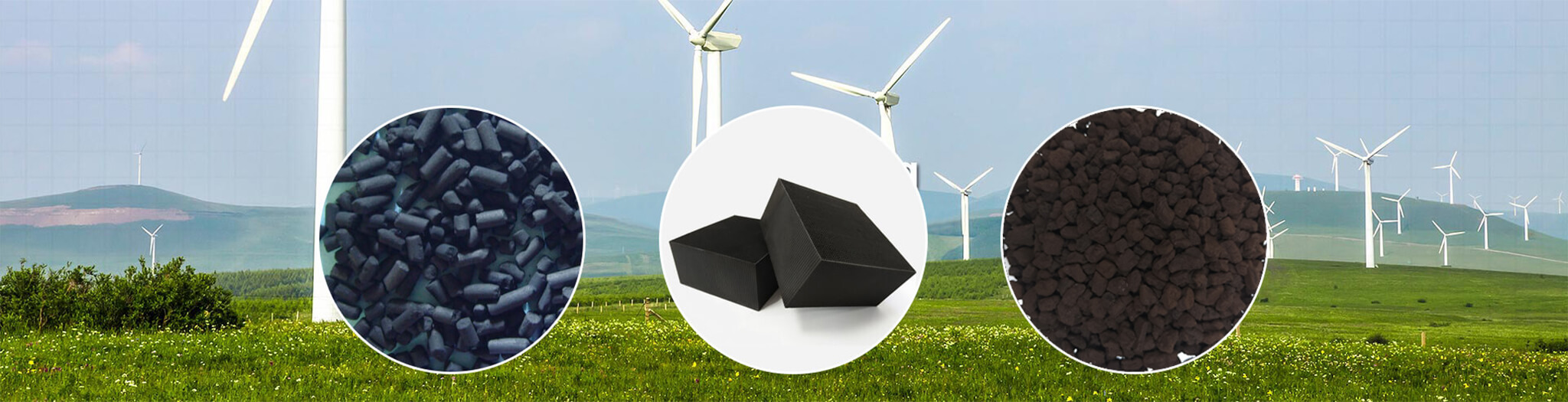
Selecting the right manganese dioxide catalyst for industrial applications is, at its core, a systematic trade‑off involving crystal phase, physicochemical properties, application scenarios, and cost‑lifetime balance. No single MnO₂ form outperforms all others across every industrial setting—α‑MnO₂, with its high lattice oxygen concentration and excellent reducibility, leads in total oxidation of organics; γ‑MnO₂ nanosheets deliver superior NOₓ conversion and N₂ selectivity in low‑temperature NH₃‑SCR denitrification; while for long‑term stable operation such as VOCs catalytic combustion, phases with better poison resistance than some noble‑metal catalysts hold the advantage. Selectors must progress through four layers—defining application boundaries, quantifying core performance indicators, matching scenario‑specific needs, and predicting lifetime factors—to reach a decision that is both technically sound and economically viable.
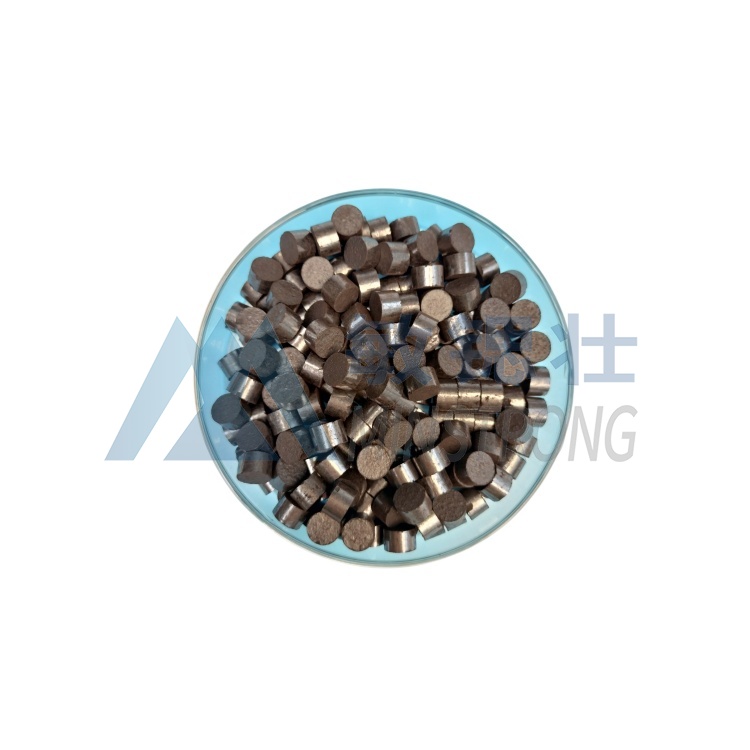
The prominence of manganese dioxide in industrial catalysis stems from its unique physicochemical attributes. Its fundamental building block is the MnO₆ octahedron, which assembles into various crystal phases (α, β, γ, δ, ε, etc.) depending on the linkage mode. This structural diversity endows MnO₂ with a rich array of catalytic behaviors—different tunnel sizes and interlayer spacings directly govern the accessibility of reactant molecules to active sites.
From an industrial perspective, manganese dioxide exhibits several distinct features. First, it offers “mild and cost‑effective” catalytic power. In potassium chlorate decomposition for oxygen generation, MnO₂ lowers the reaction temperature from 400 °C to about 200 °C; in VOCs catalytic combustion, it efficiently breaks down toluene, xylene, and other pollutants at moderate‑low temperatures of 200‑300 °C. Compared with noble‑metal catalysts, MnO₂ is not only far cheaper but also shows unique advantages in poison resistance.
Second, it provides flexible multi‑scenario adaptability. Manganese dioxide spans numerous industrial fields: selective oxidation of alcohols to aldehydes/ketones in organic synthesis; catalytic oxidation of VOCs and CO in exhaust treatment; catalytic degradation of organic pollutants in wastewater; and as a depolarizer and electrode material in batteries. This broad applicability makes it one of the few “versatile” functional materials in industrial catalysis.
Third, its performance is highly tunable. By altering synthesis routes, doping, or morphology control, the catalytic performance of MnO₂ can be directionally optimized. For example, hollow mesoporous structures expose more active sites and enhance diffusion; metal doping (e.g., Cu, Ce) improves low‑temperature activity and poison resistance. This tunability offers abundant levers for industrial selection.
Industrial selection cannot rely on intuition alone; it must be grounded in quantitative assessment of core indicators. The following four dimensions constitute the “benchmark system” for evaluating MnO₂ catalysts.
Crystal phase is the primary determinant of catalytic performance. The activity ranking across phases can reverse depending on the reaction—for ethanol total oxidation, the order is α‑MnO₂ > δ‑MnO₂ > γ‑MnO₂ > β‑MnO₂; while for persulfate‑activated pollutant degradation, it is α‑MnO₂ > γ‑MnO₂ > amorphous > β‑MnO₂ > δ‑MnO₂. These differences arise from variations in exposed active facets, the number of coordinatively unsaturated metal ions, and the abundance of reactive oxygen species. The outstanding performance of α‑MnO₂ in many oxidation reactions is attributed to its higher lattice oxygen concentration and superior reducibility.
Specific surface area directly correlates with the number of active sites—larger areas generally mean more catalytic centers. OMS‑2 type molecular sieves excel precisely because of their high surface area and abundant mesopores, which boost active‑site utilization. However, surface area is not the sole determinant; in NH₃‑SCR, it is not the dominant factor—phase structure and exposed crystal facets collectively dictate performance. Therefore, selectors should consider specific surface area in conjunction with crystal phase, rather than pursuing high area in isolation.
Purity directly affects catalytic activity and side‑reaction control. Catalyst‑grade materials typically demand high purity to ensure fast reaction rates and minimize undesired by‑products. Importantly, however, the introduction of specific impurities can also serve as a performance lever—impurity ions from precursors may induce phase transformations in the prepared MnO₂, thereby altering activity; while doping with Co, Ni, or other metals can improve CO₂ mineralization selectivity. Selectors must distinguish between “harmful impurities” and “beneficial dopants”—the former should be tightly controlled, the latter can be intentionally leveraged.
Powder, granule, or pellet forms directly influence handling convenience in industrial operations. Powders offer the highest surface area, suitable for reactions where rate is critical; granules or pellets, though somewhat lower in area, are easier to load and separate in fixed‑bed reactors, with lower pressure drop and simpler handling. Selection must balance surface area against operational convenience based on reactor type and process requirements.
The “best catalyst” is always relative to a specific scenario. Below, we provide targeted selection recommendations across four major industrial sectors.
In organic synthesis, MnO₂ is mainly used for selective oxidation of alcohols and allylic alcohols to aldehydes or ketones. This scenario demands the highest activity and selectivity. Activated manganese dioxide (typically prepared by chemical methods), with its fine particles, high surface area, and strong oxidizing power, is the top choice. α‑MnO₂ shows the best activity for total oxidation of ethanol and other organics. In high‑purity applications such as pharmaceutical intermediate synthesis, high‑purity or catalyst‑grade products are essential. Note that humid environments reduce MnO₂ activity, and acidic/basic impurities in the substrate may impair its oxidizing ability.
Medium‑ to low‑concentration VOCs from printing, coating, and other industries, as well as odorous gases from wastewater plants and landfills, are key targets for MnO₂ catalysts. In such applications, thermal stability and poison resistance often outweigh initial activity. MnO₂ efficiently decomposes toluene, xylene, and other VOCs at 200‑300 °C, and exhibits better poison resistance than some noble‑metal catalysts, making it suitable for long‑term stable operation. Manganese‑based catalysts are widely used in VOCs catalytic combustion due to their structural diversity. For chlorinated VOCs, preferentially select modified manganese catalysts designed for chlorine‑poison resistance. Cu‑ or Ce‑doped manganese oxides demonstrate excellent low‑temperature activity in VOCs combustion.
In industrial wastewater treatment, MnO₂ can serve both as an adsorbent for pollutant removal and as a catalyst for oxidative degradation of organic contaminants. It can activate oxidants such as hydrogen peroxide and ozone at ambient temperature and pressure, achieving efficient degradation. In coking plant phenol‑laden wastewater, removal rates of phenols can exceed 95%. Here, reusability is critical—studies show that Mn₂O₃ performs well in repeated cycles. Selectors should focus on hydrothermal stability and resistance to metal leaching.
Though battery applications fall outside traditional “catalysis,” the demand for MnO₂ in electrocatalysis (OER, ORR) is growing. α‑MnO₂ is preferred for battery cathodes and electrocatalysts due to its excellent conductivity and stability. Electrolytic manganese dioxide (EMD), with high purity and well‑ordered crystal structure, is used in large quantities in the battery industry. In acidic OER, MnO₂‑based catalysts are attracting attention for their low cost, natural abundance, and good performance in acidic environments.
To facilitate rapid decision‑making for industrial users, the table below summarizes the key selection points for each major application.
| Application Scenario | Recommended Phase/Type | Core Indicators to Monitor | Preferred Form | Risks to Avoid |
|---|---|---|---|---|
| Organic Synthesis (alcohol→aldehyde/ketone) | β‑type / Activated MnO₂ | High surface area, high purity | Powder | Humidity, acidic impurities |
| VOCs Combustion | α‑type / Doped (Cu, Ce) | Thermal stability, poison resistance | Granule / Honeycomb | Avoid γ‑type (sintering tendency) |
| Wastewater Treatment | Amorphous / Mn₂O₃ | Reusability, leaching resistance | Powder / Granule | Manganese dissolution under acidic conditions |
| Batteries & Electrocatalysis | α‑type / EMD | Conductivity, structural stability | Powder | Structural collapse during charge‑discharge cycling |
| Low‑temperature Denitrification (NH₃‑SCR) | γ‑type nanosheets | NOₓ conversion, N₂ selectivity | Powder / Coated | Thermal aging in high‑temperature flue gas |
The industrial value of a catalyst depends not only on its initial activity but also on how long it can maintain that activity under real‑world conditions. Understanding deactivation mechanisms is the prerequisite for extending service life and lowering overall cost.
Poisoning is the most common cause of deactivation. During use, catalysts may lose activity sharply or gradually due to various influences. In the catalytic oxidation of chlorinated VOCs, chlorine poisoning reduces Mn dispersion and oxygen‑species ordering, lowers the proportion of high‑valence Mn, and collectively weakens the intrinsic oxidation capability of active sites. Water vapor (humidity) is another significant poison—transition metal oxides like MnO₂ have abundant unsaturated bonds on their surfaces as active sites, but water vapor occupies these sites, leading to deactivation. Hopcalite, for example, is sensitive to humidity and quickly deactivates when relative humidity exceeds 45%.
High temperatures may cause phase transformation or structural collapse of MnO₂. When heated in air above 530 °C, MnO₂ begins to release oxygen and transform into Mn₂O₃. This phase change is typically accompanied by loss of active sites and a sharp drop in surface area, and is usually irreversible. In high‑temperature operations such as VOCs combustion, catalysts often deactivate due to sintering. Although γ‑MnO₂ shows high initial activity, its insufficient thermal stability limits its industrial deployment in high‑temperature scenarios.
During catalytic oxidation of organics, reaction intermediates may polymerize on the catalyst surface to form coke, covering active sites and clogging pores. Coke‑induced deactivation can often be reversed by regeneration (oxidation in oxygen at elevated temperature). For certain reactions, carbonation may also be a major cause of deactivation.
In liquid‑phase applications such as wastewater treatment, MnO₂ may suffer from leaching of active components. In acidic electrolytes, MnO₂‑based catalysts can lose manganese through dissolution, causing capacity fade and activity decline. Studies show that compositing with other oxides can improve stability. Selectors should pay attention to hydrothermal stability and resistance to leaching under operating conditions.
Deactivation does not necessarily mean scrapping. Common regeneration methods include coke burning, water washing, and replenishing components. Research indicates that water washing can fully restore the activity of poisoned catalysts, while heat treatment alone is ineffective. In practice, the appropriate regeneration protocol should be chosen based on the deactivation cause. In coupled adsorption‑catalysis processes, the estimated catalyst service life can reach at least 2‑3 years.
Theoretical selection must ultimately be validated by experiments before implementation. To avoid “paper‑based” decisions, we recommend the following step‑wise screening procedure prior to formal procurement:
Following this validation flow minimizes the risk of “selection errors” and ensures that the chosen catalyst performs well and lasts long in real‑world service.
In the final analysis, selecting an industrially suitable manganese dioxide catalyst is a systematic engineering task that demands comprehensive consideration of crystal phase, physicochemical indicators, application scenarios, and lifetime factors. Selectors must not only understand the activity differences of various phases in specific reactions, but also compare quantifiable metrics like surface area and purity; they must align choices with process conditions (temperature, humidity, reaction medium) while proactively assessing deactivation risks and regeneration possibilities under actual service. Only by striking the optimal balance between technical feasibility and economic rationality can one truly identify the “most suitable” manganese dioxide catalyst for the job.
author: Gloria
date:2026/7/20
Contact: Candyly
Phone: 18142685208
Tel: 0731-84115166
Email: minstrong@minstrongchina.com
Add: E2 Building, Kinglory Science And Technology Industrial Park, Wangcheng Area, Changsha, Hunan, China.