What to Do If Ozone Levels Exceed the Limit in Production Equipment?
In modern industrial production, especially in processes involving high-voltage discharge, ultraviolet irradiation, welding and cutting, and the processing of certain organic compounds, production equipment often becomes a source of ozone. Ozone is mainly generated from oxygen in the air under the influence of electrical energy, ultraviolet radiation, or specific chemical reactions. While the ozone layer in the upper atmosphere is beneficial, excessive ozone near the ground is a harmful pollutant.
According to the national standard "Occupational Exposure Limits for Hazardous Factors in the Workplace" (GBZ 2.1-2019), the 8-hour time-weighted average permissible concentration of ozone in the workplace is 0.15 mg/m³.
This means that during normal working hours, the ozone concentration to which employees are exposed should be controlled below this level. The short-term exposure limit is 0.3 mg/m³, applicable to work environments where higher concentrations occasionally occur.
When the ozone concentration is below 0.15 mg/m³, it usually does not have a significant impact on human health, and no special treatment measures are needed. However, once this limit is exceeded, treatment procedures must be initiated.
Regarding the problem of ozone exceedance in production equipment, here are four effective solutions:
Source Optimization and Process Improvement: This is the most fundamental method. Check and optimize equipment operating parameters, such as adjusting welding current and voltage, improving the design of the discharge unit, or replacing old equipment that easily generates ozone, to reduce ozone generation at the source.
Enhanced Ventilation and Air Exchange: Install local exhaust hoods at the ozone generation points, or enhance overall workshop ventilation to dilute and remove ozone with a large amount of clean air. This method is simple, but its effectiveness is limited for high concentrations or continuous production situations, and it may lead to energy waste.
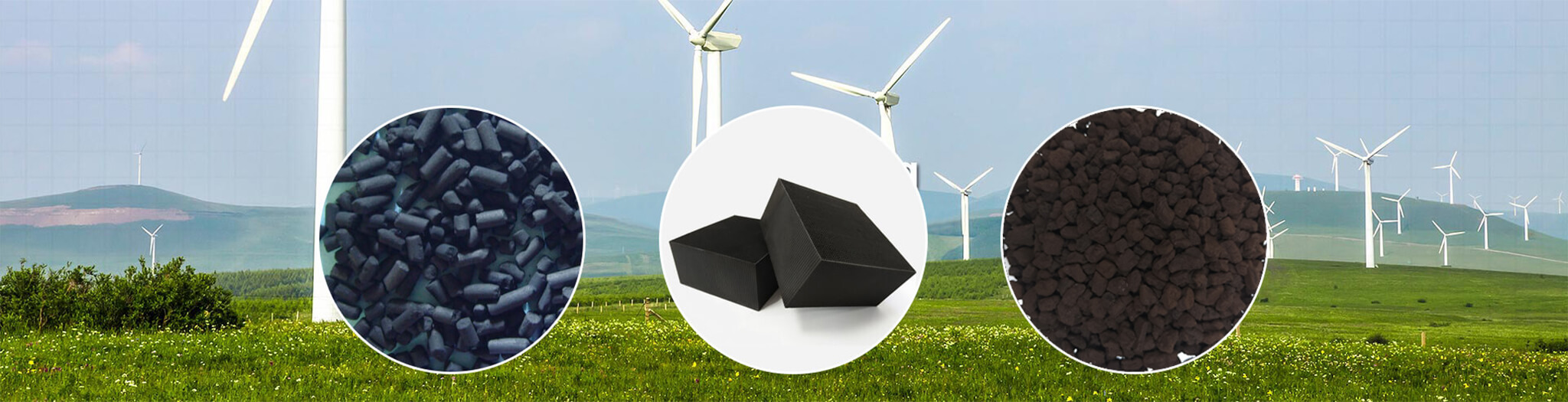
Activated carbon adsorption method: This method utilizes the large specific surface area of activated carbon to adsorb ozone. It is effective initially, but activated carbon is easily saturated and requires frequent replacement, resulting in high operating and maintenance costs, and potential secondary treatment issues after adsorption.
Application of ozone decomposition catalysts (recommended high-efficiency solution): This is currently recognized as a highly efficient, long-lasting, and low-cost treatment technology. Its core is the use of special catalysts (usually metal oxides such as manganese dioxide as the active ingredient) that promote the rapid decomposition of ozone into harmless oxygen at room temperature.
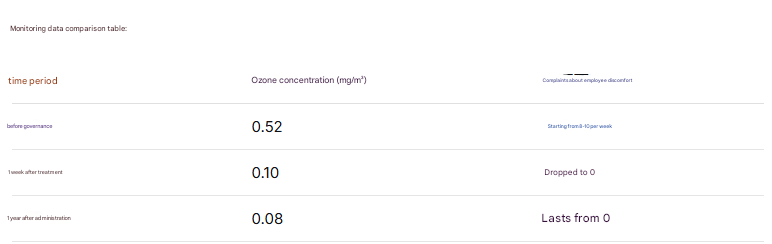
After a packaging and printing company installed three high-speed printing presses, the ozone concentration in the workshop reached 0.52 mg/m³ (2.5 times the standard limit). After adopting a modular ozone decomposition system:
Concentration dropped to 0.10 mg/m³ within 7 days of installation
Catalyst lifespan reached over 18 months
Annual energy consumption was only 1/5 of the ventilation system
Equipment noise reduced from 85 dB to below 65 dB
Selection Recommendations
For intermittent, low-concentration ozone, activated carbon adsorption can be used. However, for continuous production and high-concentration industrial scenarios, the ozone decomposition catalyst system, with its:
Operation at room temperature, extremely low energy consumption
Complete decomposition, no secondary pollution
Long service life, simple maintenance
Modular design, easy installation and modification
has become the preferred solution for industries such as electronics manufacturing, printing and packaging, and wastewater treatment. It is recommended that companies conduct professional testing first and choose the most suitable treatment plan based on concentration levels and production characteristics.
Ozone exceeding the standard is not an insurmountable problem. Through scientific testing, rational selection, and the combination of efficient catalytic decomposition technology, it is entirely possible to create a safe and healthy working environment while ensuring production.
Author: Hazel
Date: 2026-01-16