Are Alumina-Supported Catalysts Suitable for Gas Purification?
In modern industrial production and cutting-edge technologies, gas purity is often the key to success. From ensuring the efficient operation of chemical reactions to protecting the manufacturing of precision electronic components and producing high-energy fuels, gas purification plays a crucial role as a behind-the-scenes "cleaner." Simply put, it is the process of removing various impurities (such as oxygen, water, sulfides, carbon monoxide, etc.) from gases, and is a core link in improving product quality, ensuring production safety, and reducing energy consumption.
There are various
gas purification methods, mainly including adsorption, absorption, membrane separation, and catalytic methods. Among them, the catalytic method, due to its high efficiency and ability to selectively remove specific impurities through deep conversion, has become the preferred method for many deep purification scenarios. This leads to the core question: In the catalytic method, is alumina suitable as a catalyst support?
The answer is yes. Alumina, especially γ-alumina, is not only suitable but also one of the most widely used and reliable supports in the field of gas purification catalysts. Its ability to serve as a "cornerstone" is attributed to its four unique advantages:
High specific surface area, providing ample "battleground": Alumina possesses a rich porous structure and a huge specific surface area, like a microscopic "super stadium," which can highly disperse active metal components such as platinum, palladium, and nickel, greatly increasing the contact and reaction sites with impurity gas molecules, thereby improving purification efficiency.
Excellent stability, durable and reliable: It has excellent thermal stability and mechanical strength, and can operate for a long time at reaction temperatures of several hundred degrees Celsius without pulverization, ensuring the service life of the catalyst and the stable operation of the device.
"Perfect cooperation" with active components: The surface of alumina has certain acidic sites, which can generate strong interactions with active metals, fixing the metal particles like an "anchor" and preventing them from aggregating and deactivating at high temperatures.
Economic advantages: Compared with some special carriers, the industrial production technology of alumina is mature, the cost is relatively low, and it is highly cost-effective, making it very suitable for large-scale industrial applications.
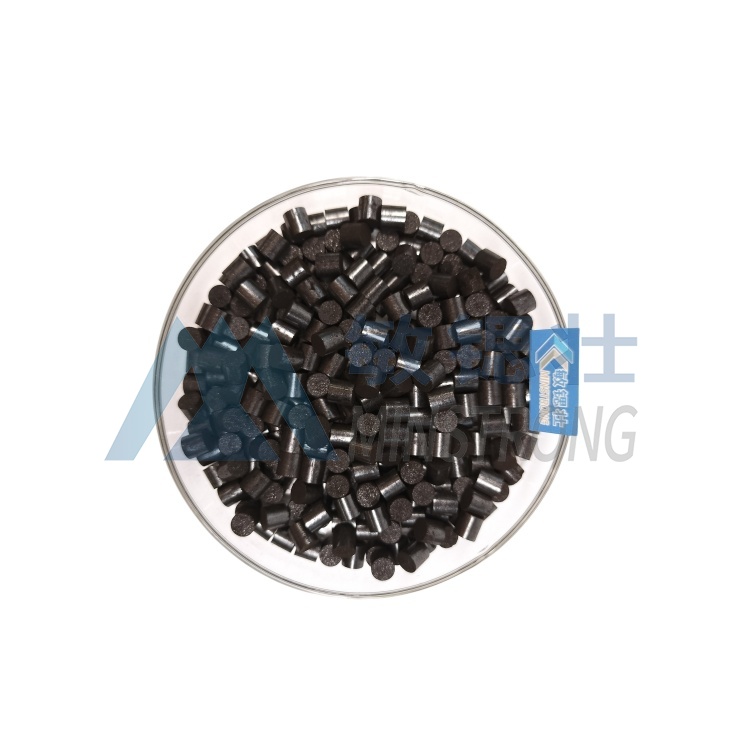
Theory needs to be verified by practice. In the hydrogen energy industry, a classic application is the use of a "palladium/alumina (Pd/Al₂O₃)" catalyst for hydrogen deoxygenation. For example, in the hydrogen supply system of proton exchange membrane fuel cells, even trace amounts of oxygen can poison the expensive battery electrodes. By passing hydrogen through a purifier containing this catalyst, oxygen can react catalytically with hydrogen to produce water at room temperature, easily reducing the oxygen concentration to below 1 ppm (parts per million), meeting the stringent requirements of fuel cells. Another example is in the ammonia synthesis industry, where a "nickel/alumina (Ni/Al₂O₃)" catalyst is used to hydrogenate trace amounts of carbon monoxide and carbon dioxide remaining in the raw gas into methane and water, achieving deep purification and protecting the synthesis catalyst in subsequent stages.
Of course, alumina carriers are not omnipotent. In extreme environments such as strong acids or high-temperature water vapor, its structure may be damaged. Therefore, engineers will modify the alumina or choose more specialized carriers according to the specific gas composition and process conditions. However, there is no doubt that for most common gas purification needs under non-extreme conditions, alumina-supported catalysts, with their combined advantages of high efficiency, stability, and cost-effectiveness, are undoubtedly a highly suitable and powerful solution, continuously safeguarding the "respiratory system" of modern industry.
Author: Hazel
Date: 2025-01-12