How to Improve Indoor Air Quality Using Ozone Decomposition Catalysts?
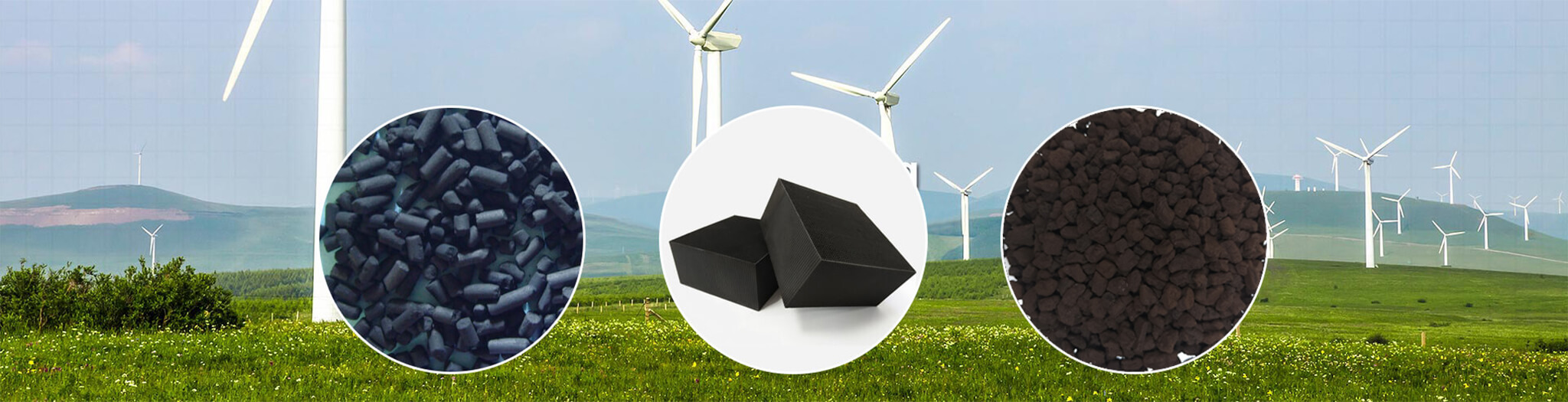
A company specializing in the research and production of a series of environmentally friendly catalytic materials, including
ozone decomposition catalysts, carbon monoxide catalysts, Hopcalite catalysts, manganese dioxide, copper oxide, VOC catalysts, and hydrogen peroxide catalysts, is compiling this information to provide highly adaptable catalytic material solutions for various environmental treatment scenarios, hoping to be helpful to everyone.
Our main customer base includes:
industrial waste gas treatment companies, ozone purification equipment manufacturers, motor vehicles, ships, exhaust gas treatment companies, petrochemical and chemical industry environmental protection supporting companies, coating and printing companies, VOCs treatment companies, municipal and industrial wastewater treatment companies, metallurgical and thermal power plant flue gas treatment manufacturers, laboratories, enclosed space air purification equipment manufacturers, environmental engineering general contractors and operation and maintenance companies, etc.
Modern people spend up to 90% of their time indoors, and indoor air quality directly affects everyone's health and well-being. When it comes to indoor pollution, most people first think of common pollutants such as formaldehyde and PM2.5, but they overlook ozone (O₃), an "invisible killer." Printers and copiers in office settings, commonly used ultraviolet disinfection lamps and some air purifiers in homes, and ozone infiltrating from outdoors can all lead to excessive indoor ozone concentrations. Prolonged exposure to low concentrations of ozone can not only cause respiratory discomfort such as dry throat and cough, but also damage lung function and induce asthma, posing a more significant threat to vulnerable groups such as the elderly and children. To address the problem of indoor ozone pollution, ozone decomposition catalysts, with their unique advantages, have become a core solution in the field of indoor air purification.
Core Principle: Efficient Conversion, Turning Harm into Benefit
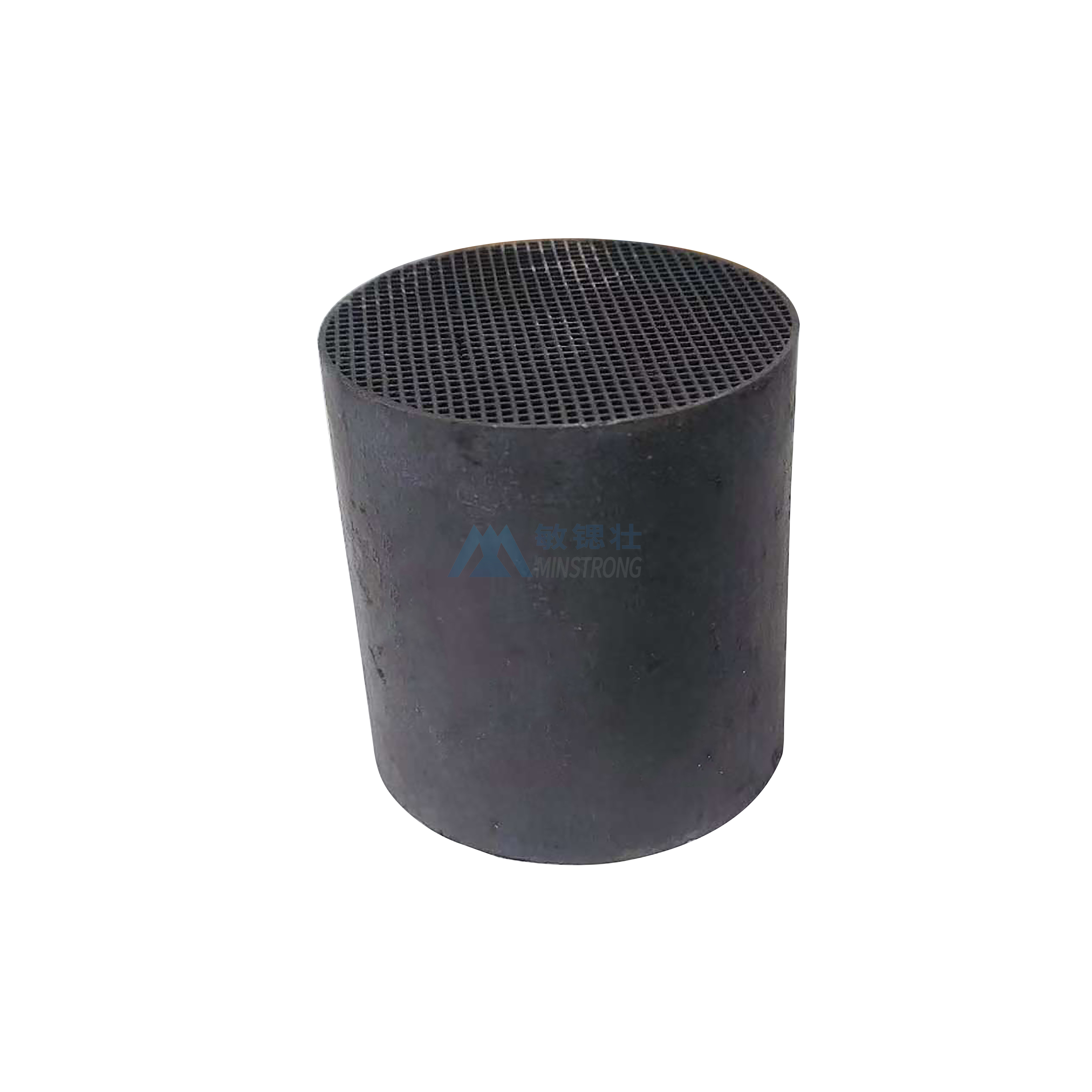
The core value of ozone decomposition catalysts lies in achieving the harmless conversion of ozone through catalytic reactions. Their working mechanism differs from traditional purification technologies, offering greater stability and efficiency. The structural design of these catalysts is highly scientific, typically using porous materials as carriers, such as activated carbon, alumina, and molecular sieves. These carriers possess a very large specific surface area, which can quickly adsorb ozone molecules from the air, providing a "reaction platform" for subsequent reactions. The transition metal oxides, such as manganese, iron, and copper, loaded on the carrier surface, are the "core driving force" of the catalytic reaction. They provide sufficient active sites, significantly reducing the energy barrier required for ozone decomposition, allowing ozone to rapidly decompose into harmless oxygen (O₂) at normal temperature and pressure.
Compared with traditional treatment methods, ozone decomposition catalysts have significant advantages: Compared with activated carbon adsorption, they do not rely on physical adsorption capacity and will not experience adsorption saturation failure, enabling long-term stable purification; compared with ultraviolet light decomposition technology, they do not require additional electricity consumption, avoiding secondary pollutants that may be produced by ultraviolet light irradiation, truly achieving "zero energy consumption and no residue." This passive catalytic conversion characteristic makes it an ideal choice for indoor ozone pollution control. Scenario Implementation: Multi-Dimensional Penetration, Comprehensive Protection
With the maturation of technology, ozone decomposition catalysts have been deeply integrated into various indoor environments, forming a comprehensive protection system covering multiple dimensions, including homes, offices, and special locations:
In basic purification scenarios for homes and offices, catalysts are often embedded in the air ducts of fresh air systems and central air conditioners in the form of filters or modules. As air flows through, they can decompose ozone in the air in real time, while simultaneously intercepting ozone pollutants infiltrating from outdoors, creating a clean breathing environment indoors. For office equipment such as printers and photocopiers that easily generate ozone, and some air purifiers that release excessive ozone, manufacturers have begun to incorporate miniaturized catalytic modules to reduce ozone emissions at the source of pollution and solve localized pollution problems.
In terms of customized protection for special locations, professional catalytic purification devices have become standard equipment in environments with extremely high air quality requirements and where ozone concentrations are prone to exceeding limits, such as hospital operating rooms, laboratories, and electronic factories. These devices use high-efficiency catalytic formulas that can quickly degrade high concentrations of ozone in a short time, while also adapting to the cleanliness requirements of special locations, avoiding secondary environmental impacts during the purification process. In places with vulnerable populations, such as kindergartens and nursing homes, catalytic purification equipment will also combine with concentration monitoring functions to achieve precise control of ozone pollution.
In the field of innovative applications of building materials, new environmentally friendly coatings and wallpapers are beginning to incorporate nano-scale ozone decomposition catalysts, allowing walls and other building components to possess ozone decomposition capabilities, achieving "passive purification." This model of integrating catalytic technology with building materials requires no additional equipment, saves space, and can provide long-term purification effects, becoming a new trend in indoor air quality management.
Technological Advancement: Multifunctional Integration, Low-Consumption and High-Efficiency Upgrade
Currently, the research and development of ozone decomposition catalysts is moving towards "multifunctionality, low energy consumption, and high stability," and its value has surpassed the scope of single ozone decomposition, achieving a breakthrough in comprehensive pollution control. Advanced catalytic formulas can not only efficiently decompose ozone but also simultaneously catalyze the oxidation of volatile organic pollutants such as formaldehyde, benzene, and toluene, converting multiple pollutants into harmless water and carbon dioxide, achieving a "multi-purpose" composite purification effect and significantly reducing the cost of indoor composite pollution control. In terms of low-temperature adaptability, traditional catalysts often experience a decrease in activity in low-temperature winter environments. However, the newly developed manganese-based composite catalysts and cerium-based modified catalysts can maintain a stable ozone removal rate of over 95% even at room temperature or low temperatures, completely solving the purification problem in low-temperature environments. At the same time, researchers have improved the catalyst's resistance to poisoning by optimizing the carrier structure and the ratio of active components, effectively resisting the impact of impurities such as dust and water vapor on catalytic activity, extending the catalyst's service life, and further reducing usage costs.
Empowering Health: The Synergistic Protection of Technology and Life
The widespread adoption of ozone decomposition catalysts is not only the implementation of a technological innovation but also conveys the concept of " proactive protection + scientific management" for indoor health. To create a truly safe indoor breathing environment, relying solely on catalytic technology is far from enough; a comprehensive system of "source control + process purification + habit formation" is needed: at the source level, prioritize the selection of electrical equipment with low ozone emissions to reduce pollution; at the process purification level, combine ozone decomposition catalysts and high-efficiency air purifiers to achieve precise pollutant control; and at the lifestyle level, rationally plan indoor ventilation times, avoiding opening windows during periods of high outdoor ozone concentration to reduce external pollution infiltration.
In the future, with the deep integration of intelligent monitoring technology and catalytic technology, ozone decomposition catalysts will achieve more precise purification control – by real-time monitoring of indoor ozone concentration, automatically adjusting the working efficiency of the catalytic device to achieve "on-demand purification"; at the same time, the exploration of new technologies such as solar-powered and passive catalysis will enable ozone purification to achieve "zero energy consumption, all-weather" operation, further enhancing the practicality and environmental friendliness of the technology.
From professional applications in the industrial field to widespread use in daily life, ozone decomposition catalysts, with their silent technological power, transform harmful ozone into life-essential oxygen, building a strong defense line for everyone's respiratory health. In today's increasingly sophisticated indoor air pollution control, these technological innovations may seem small, but they carry people's aspirations for a healthy life, making every indoor breath safer and more comfortable.
author: Hazel
date: 2026-01-23