How Does the Hogarat Agent Break Through the Performance Limit?
A company specializing in the R&D and production of a series of environmentally friendly catalytic materials, including
ozone decomposition catalysts, carbon monoxide catalysts, hogallat agents, manganese dioxide, copper oxide, VOC catalysts, and hydrogen peroxide catalysts, is compiling information to provide highly adaptable catalytic material solutions for various environmental governance scenarios. We hope this information will be helpful.
Our main customer base includes: industrial
waste gas treatment companies, ozone purification equipment manufacturers, environmental protection companies in the automotive, shipbuilding, exhaust gas treatment, petrochemical, and chemical industries, coating, printing, VOCs treatment, municipal and industrial wastewater treatment companies, flue gas treatment companies in the metallurgical and thermal power industries, laboratory and enclosed space air purification equipment manufacturers, and environmental engineering general contracting and operation and maintenance companies.
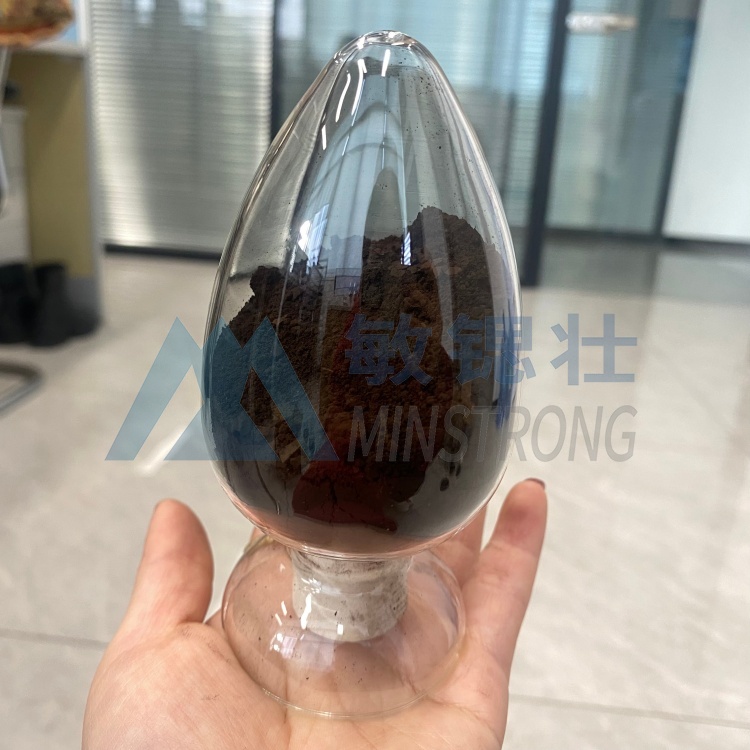
Hogallat agents are catalysts composed of activated manganese dioxide and copper oxide. Due to their highly efficient catalytic oxidation of carbon monoxide at room temperature, they have become a key material in the field of respiratory protection. However, problems such as easy deactivation at humidity exceeding 45%, low utilization rate of active components, and poor long-term operational stability have long restricted the expansion of their application scope. In recent years, breakthroughs in materials science and preparation processes are redefining the performance boundaries of this classic catalyst.
I. Moisture Resistance: Overcoming the Technical Barrier of Moisture Poisoning
Key Breakthrough: The core mechanism of deactivation in traditional hogallat catalysts is the adsorption of water vapor on the surface of active sites, forming hydroxyl groups that block the contact between carbon monoxide and the active centers. Experimental data shows that after one year of operation in a 50% humidity environment, the catalyst's specific surface area decreased from 200 m²/g to 120 m²/g, and the catalytic efficiency dropped from 95% to 70%. Therefore, the key to overcoming moisture resistance lies in inhibiting the adsorption of hydroxyl groups at active sites.
Specific Implementation Plan: Research shows that doping with elements such as aluminum and magnesium can significantly improve the catalyst's moisture resistance. The introduction of Al and Mg can reduce the adsorption of hydroxyl groups on Mn species, with Al-Mg co-doping showing the best stability improvement effect. An application case in a southern textile factory verified this technical approach: after using a moisture-resistant modified regenerator, the catalyst maintained an 85% catalytic efficiency after six months of continuous operation in a 70% high humidity environment, while ordinary products dropped to 65% after only two months.
II. Catalytic Activity: From Lattice Regulation to Quantum Efficiency Enhancement
Key Breakthrough: The essence of catalytic activity lies in the adsorption and conversion capacity of active sites for carbon monoxide molecules. The activity of traditional hogallat agents is limited by the electron transfer efficiency of the Cu²⁺/Mn³⁺ redox pair. The core of the technological breakthrough lies in increasing the number of active centers per unit mass of catalyst and their intrinsic activity.
Specific Implementation Plan: Rare earth element doping has become an important direction for activity enhancement. Ce doping, by inducing lattice distortion, weakens the binding energy of oxygen atoms, resulting in a 50% increase in CO conversion at room temperature and an 8-fold increase in reaction rate. Even more groundbreaking is the cobalt modification technology—through the design of a copper-cobalt-manganese spinel structure, the specific activity of the catalyst at room temperature reaches 3.5 times that of the traditional system, thanks to the contribution of Co³⁺ and Mn⁴⁺ surface species and the enhanced lattice oxygen migration ability. In underground mine fume purification scenarios, using a catalyst with an optimized ratio (CuO:MnO₂ molar ratio of 1:1) combined with hydrogen reduction activation at 180-220℃ ensures full exposure of active sites.
III. Service Life: Synergistic Effect of Structural Stability and Online Regeneration
Key Breakthrough: Service life is determined by resistance to poisoning, structural stability, and regeneration performance. Traditional catalysts can achieve an initial efficiency of over 97% under 20000 h⁻¹ space velocity conditions, but their efficiency easily declines during operation due to carbon buildup, sintering, or poisoning. The technological breakthrough lies in constructing stable pore structures and developing efficient regeneration processes.
Specific Implementation Plan: Mesoporous structure engineering is the foundation for improving stability. The mesoporous Cu-Mn catalyst prepared by the co-precipitation method has a specific surface area far exceeding that of traditional products (31 m²/g). The mesoporous structure facilitates gas diffusion while inhibiting grain growth. Online regeneration technology provides an economical path to extending catalyst lifespan: A mine heated deactivated catalysts at 120°C for 8 minutes, restoring catalytic efficiency to 92% of the initial level after regeneration, reducing annual maintenance costs by over 50,000 yuan. Improvements in production processes also contribute significantly—using positive/negative pressure solid-liquid separation devices, the production cycle was shortened from 8 days to 2 days, while sulfate impurities were controlled to below one ten-thousandth, reducing the risk of poisoning at the source.
Technological breakthroughs in hogallat agents are moving from single-formulation optimization to multi-scale synergistic design: moisture resistance is achieved through surface chemical modification via elemental doping, catalytic activity is enhanced through lattice engineering to improve quantum efficiency, and lifespan is guaranteed by both pore channel control and regeneration processes. These innovations not only expand their application boundaries under complex high-temperature, high-humidity, and low-temperature conditions but also provide more reliable technical support for the safety protection of confined spaces. In the future, with the maturation of technologies such as rare earth modification and spinel structure design, the performance ceiling of hogallat agents will continue to be broken.
Author: Hazel
Date: 2026-03-03