How to Choose a Precious Metal Catalyst Carrier Suitable for Small-Scale Trials?
Due to their high activity and selectivity, precious metal catalysts are widely used in chemical reactions such as hydrogenation, oxidation, and reforming. However, the choice of carrier during the small-scale trial phase directly affects experimental efficiency and the reliability of the results. The following analysis focuses on the characteristics of precious metal catalysts, carrier types, and suitability for small-scale trials.
I. Core Advantages and Disadvantages of Precious Metal Catalysts
Advantages: High active site utilization, capable of driving reactions at low temperatures and pressures; excellent selectivity; strong stability, and continuous reaction cycles of up to hundreds of hours.
Disadvantages: High cost of precious metals; susceptible to poisoning by impurities such as sulfur and phosphorus; scarce resources, requiring precise dosage control during pilot trials.
II. Common Types of Precious Metal Catalyst Supports
The support serves as the "skeleton" of the precious metal, influencing the dispersion of the active components and the reaction mass transfer efficiency. Key types include:
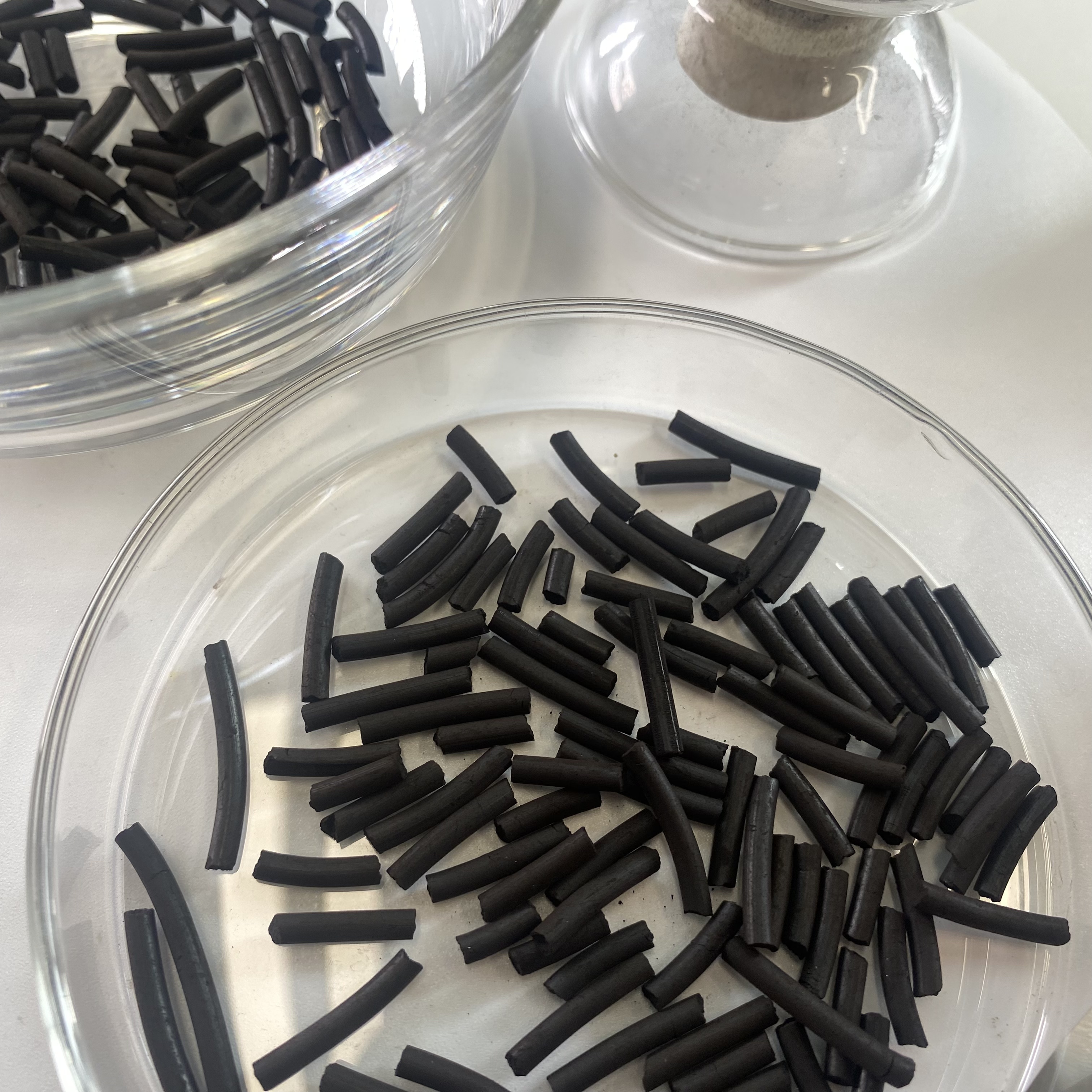
Activated carbon: Large surface area and rich surface active groups such as hydroxyl and carboxyl groups, making it suitable for supporting palladium and platinum for hydrogenation reactions (such as the hydrogenation of nitrobenzene to aniline).
Alumina: High mechanical strength and high-temperature resistance, making it suitable for supporting ruthenium and rhodium for high-temperature oxidation reactions.
Zeolite: Molecular sieves: Their regular pore structure enhances reaction selectivity through shape-selective effects and are commonly used in pilot trials of aromatic isomerization with platinum.
Silica: Highly inert surface, suitable for reactions requiring weak metal-support interactions. Carbon nanotubes: Their tubular structure facilitates mass transfer and offers excellent conductivity, making them suitable for small-scale electrocatalytic trials.
III. Preferred Carriers for the Pilot Stage: Activated Carbon and Alumina
The core requirements for pilot-scale trials are low cost, easy availability, ease of processing, and high data reproducibility. Therefore, activated carbon and alumina are more suitable.
Activated carbon: Low price and widespread availability; simple loading methods; suitable for pilot-scale reactions such as hydrogenation and coupling at ambient temperature and pressure, and easy to characterize using thermogravimetric and infrared methods.
Alumina: Highly stable and insoluble in acidic and alkaline media, it is suitable for pilot-scale trials requiring temperature control. Granular carriers are easy to load and can simulate fixed-bed reactor conditions.
IV. Considerations for Pilot-Scale Carrier Selection
Prioritize reaction type: Choose activated carbon for hydrogenation reactions and alumina for high-temperature oxidation reactions.
Control carrier particle size: Pilot-scale reactors are small, so a carrier particle size of 20-60 mesh is recommended to avoid clogging and excessive pressure drop. Reserve room for scale-up: If subsequent pilot testing is planned, avoid using carriers such as carbon nanotubes, which are costly and difficult to mass-produce.
During the pilot phase, the selection of precious metal catalyst carriers requires a balance between cost, operability, and reaction compatibility. Activated carbon and alumina, due to their high cost-effectiveness and universal applicability, are preferred for most pilot-scale scenarios.
Author: Hazel
Date: 2025-10-13