
Language: ChineselineEnglish

Industry new

How to Select Copper Oxide Catalysts for Ceramic Coloring?

A company specializing in the R&D and production of a series of eco-friendly catalytic materials—including ozone decomposition catalysts, carbon monoxide catalysts, Hopcalite, manganese dioxide, copper oxide, VOC catalysts, and hydrogen peroxide catalysts—has compiled the following information for your reference. Our goal is to provide highly compatible catalytic material solutions for various environmental remediation scenarios, and we hope this proves helpful to you.

Our primary client base encompasses: industrial waste gas treatment enterprises; manufacturers of ozone purification equipment; sectors involving motor vehicles, marine vessels, and exhaust gas treatment; environmental support enterprises within the petrochemical and chemical industries; painting and printing operations; VOCs treatment providers; municipal and industrial wastewater treatment facilities; manufacturers of flue gas treatment systems for the metallurgy and thermal power industries; laboratories; manufacturers of air purification equipment for enclosed spaces; and general contractors and operations & maintenance providers for environmental engineering projects.
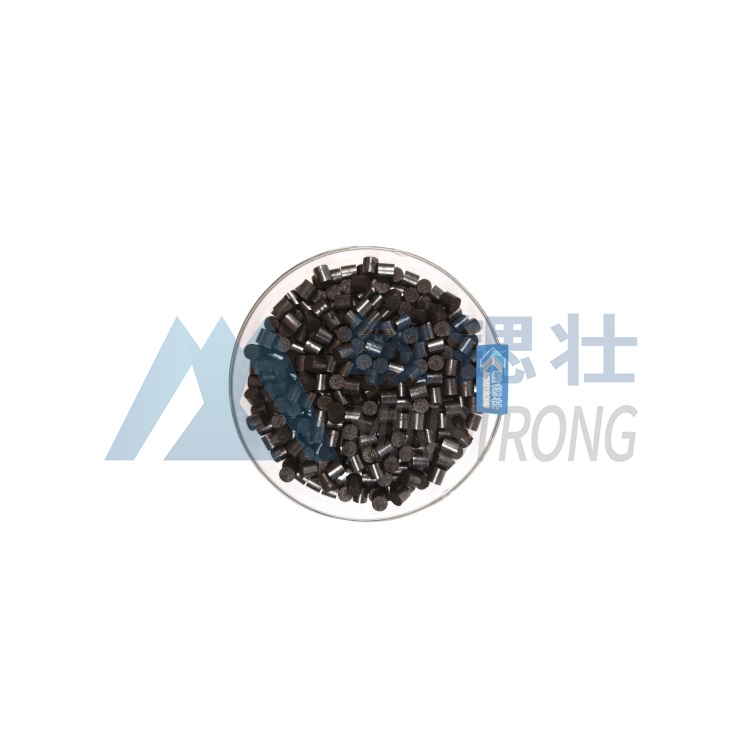
 copper oxide


Copper oxide catalysts serve as a core raw material for coloring both ceramic bodies and glazes. Thanks to their exceptional redox properties, they act as key auxiliaries for achieving various color palettes—such as red, green, and blue—in ceramics. Their performance directly determines the final ceramic product's color development effect, color uniformity, and overall yield rate. Faced with a variety of specifications—including standard and high-activity copper oxide catalysts—how should ceramic manufacturers select the right product to best suit their specific firing processes? A selection methodology grounded in practical application cases offers a more precise approach to resolving the industry's common product-selection challenges.

When selecting copper oxide catalysts for ceramic coloring, the primary considerations must be coloring activity and compatibility with the specific color development requirements.

 Highly active catalysts enable ceramic colors to appear richer and more precise. For instance, in the high-temperature underglaze coloring of green glazes, ceramic manufacturers utilizing highly active copper oxide catalysts have successfully resolved issues associated with traditional catalysts—specifically, pale coloration and a yellowish cast. The resulting green glazes exhibit vibrant hues and high color consistency. In practical application, it is essential to select a specialized catalyst variant based on the specific body and glaze types, as well as the target color palette; furthermore, manufacturers should require suppliers to provide empirical data regarding the actual coloring performance in ceramic applications.


High purity and rigorous impurity control are critical to avoiding coloring defects.

Impurities—particularly heavy metals and alkali metals—within catalysts can easily lead to discoloration and speckling in ceramics. One manufacturer of daily-use ceramics, for example, frequently encountered small black spots on its glaze surfaces due to the use of low-purity copper oxide catalysts. After switching to a chemically synthesized, highly active copper oxide catalyst (with impurity levels controlled below 0.01%), the product yield rate improved by over 90%. In practice, it is imperative to verify official purity analysis reports, with a specific focus on scrutinizing the content of critical impurities.

Thermal stability and compatibility with firing processes directly impact the results of high-temperature firing.

Ceramic firing typically takes place within a high-temperature range of 800°C to 1300°C; catalysts lacking sufficient thermal stability are prone to decomposition and oxidation, which can result in color fading or a grayish cast. A manufacturer of architectural ceramics, when producing red-brown antique-style tiles, opted for a high-temperature-resistant copper oxide catalyst. Even during a high-temperature bisque firing process at 1250°C, the finished products maintained uniform coloration, exhibiting no signs of fading or whitening. In practical operations, it is necessary to confirm the catalyst's compatibility with the specific firing temperatures and processes, and to verify the data from high-temperature stability tests.

Uniform particle size and excellent dispersibility are essential for scaling up ceramic production.

Catalysts with non-uniform particle sizes can easily lead to uneven coloring and color variations. An artistic ceramics studio, when creating "Blue and White with Underglaze Red" pieces, utilized a micro-nanometer-scale copper oxide catalyst with a uniform particle size distribution. Thanks to its excellent dispersibility, the catalyst integrated fully with the ceramic raw materials; the finished pieces featured natural, seamless color transitions within their patterns, thereby resolving long-standing issues regarding color inconsistency. In practice, manufacturers should request particle size distribution analysis reports and select particle size specifications that are optimally suited to their specific production processes. 


The selection of copper oxide catalysts for ceramic coloring centers on the core principles of "process compatibility as the foundation, catalytic activity and purity as the core, and stability and uniformity as the basis." By taking into account specific ceramic firing temperatures, color palettes, and body-glaze compositions—and by referencing real-world application cases within the industry—manufacturers can identify suppliers capable of offering customized product recommendations. This strategic selection ensures more uniform coloring and stable color development in ceramics, thereby establishing a solid raw material foundation for enhancing both the quality and efficiency of ceramic products.


Author: Hazel
Date: March 26, 2026

CONTACT US

Contact: Candyly

Phone: 18142685208

Tel: 0731-84115166

Email: minstrong@minstrongchina.com

Add: E2 Building, Kinglory Science And Technology Industrial Park, Wangcheng Area, Changsha, Hunan, China.

Scan the qr codeClose
the qr code