Language:



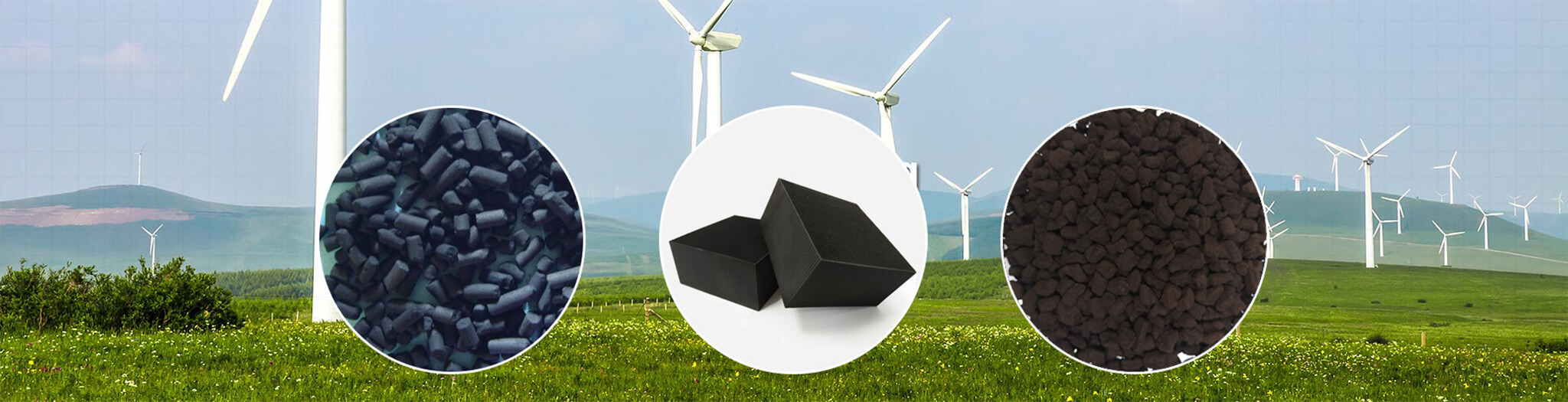
A zeolite rotor mainly concentrates VOC exhaust gas through adsorption and desorption; it does not directly achieve complete destruction of organic pollutants. After the raw exhaust gas enters the rotor, VOCs are adsorbed on the zeolite material. When the gas passes through the desorption zone, the VOCs re-enter the gas phase under the action of hot air, forming desorption exhaust gas with a smaller flow rate and a higher pollutant concentration. This gas still requires subsequent treatment to meet the applicable emission requirements.
Catalytic oxidation is one of the common end-of-pipe treatment technologies used after rotor concentration. Its basic principle is to use active sites on the surface of a VOC catalyst to promote the oxidation reaction between organic compounds and oxygen, converting amenable organic compounds into carbon dioxide and water at a relatively low temperature. Compared with direct thermal oxidation, catalytic oxidation can reduce the temperature required for the oxidation of some organic compounds. However, the actual performance depends on factors such as VOC type, catalyst composition, reaction temperature, and gas residence time.
It should be noted that a higher rotor concentration ratio does not necessarily mean better downstream treatment performance. The VOC concentration, mass flow rate, and fluctuation range of the concentrated gas must match the design capacity of the catalytic oxidation system. Otherwise, problems such as abnormal reaction temperature, reduced treatment efficiency, or unstable system operation may occur.
The zeolite rotor adsorbs and centrally desorbs part of the VOCs in the raw exhaust gas, significantly reducing the amount of gas to be treated downstream. For high-flow, low-concentration exhaust gas, this approach helps reduce the treatment flow rate of downstream oxidation equipment.
Engineering design cannot determine catalyst loading solely based on the concentration ratio; the actual mass flow rate of VOCs must also be calculated. Assume that the raw exhaust gas flow rate is Q1, the inlet concentration is C1, the desorption exhaust gas flow rate is Q2, and the outlet concentration is C2. On a consistent temperature, pressure, and concentration basis, the following approximate calculation can be made based on mass balance:
Q1C1η = Q2C2
Where η is the actual VOC capture efficiency of the rotor. This relationship is a simplified engineering estimate applicable to average values calculated on a time basis. For design purposes, C2 and Q2 should be calculated separately for peak and average values over a complete desorption cycle, and η should be determined from measured data or rotor vendor data rather than replaced by a nameplate concentration ratio. It can be seen that the desorption gas concentration depends not only on the flow rate ratio but also on the rotor adsorption efficiency and the desorption process.
Industrial exhaust gas often contains multiple organic compounds, and different components have different adsorption capacities on zeolite materials. Boiling point, molecular structure, polarity, and molecular size all affect adsorption and desorption behavior. High-boiling-point components may be preferentially adsorbed and may displace some already-adsorbed low-boiling-point components, so the composition of the rotor desorption gas is not necessarily identical to that of the raw exhaust gas. Downstream catalyst selection should be based on the actual composition of the desorption gas and cannot be determined solely from the raw exhaust gas test results.
The rotor operates continuously, and the adsorption zone and desorption zone switch continuously. Desorption temperature, rotor speed, production load, and changes in raw exhaust gas concentration can all affect the instantaneous concentration of the desorption gas. If the catalytic oxidation system is designed only for the average concentration without considering concentration peaks, problems such as excessively high organic loading over a short period, increased bed temperature, or outlet concentration fluctuations may occur.
The desorption gas may contain water vapor, particulate matter, oil mist, and impurities such as sulfur- and halogen-containing substances. In some catalyst systems, water vapor may compete with VOCs for adsorption sites, and high water vapor concentrations may aggravate hydrothermal deactivation of certain catalysts. Sulfur-, phosphorus-, and halogen-containing substances may cause reduced catalyst activity or even permanent deactivation. The specific impact depends on the catalyst material and the type of impurities and must be confirmed through tests under actual operating conditions.
After pretreatment and temperature adjustment, the desorption exhaust gas enters the catalytic reactor. Organic molecules reach the catalyst surface with the gas flow and adsorb at active sites. The catalyst changes the reaction pathway and lowers the activation energy of some oxidation reactions, making it easier for organic compounds to react with oxygen at a suitable temperature.
With sufficient oxygen supply, appropriate temperature, and adequate residence time, amenable organic compounds can be further oxidized, mainly producing carbon dioxide and water. For mixed VOC exhaust gas with a complex composition, different components have different reactivities, and some organic compounds may require a higher reaction temperature or a longer residence time. Therefore, when evaluating catalytic oxidation performance, it is not sufficient to measure only the total VOC concentration; carbon monoxide and other possible partial-oxidation products should also be monitored according to the nature of the pollutants.
Reaction temperature determines the catalytic reaction rate, space velocity affects the amount of gas passing through the catalyst bed per unit time, and oxygen content affects whether the oxidation reaction can proceed sufficiently.
Space velocity and residence time have an approximate relationship: residence time t can be expressed as the ratio of catalyst bed volume V to standard volumetric gas flow rate Q, while space velocity (volumetric space velocity) is Q/V. In engineering practice, the design space velocity of catalytic combustion units should generally be controlled on the order of 10,000–40,000 h-1, with the specific value adjusted according to catalyst type, VOC reactivity, and target conversion rate. For highly active precious metal catalyst systems, space velocity is often controlled at 10,000–25,000 h-1, and the actual residence time at the reaction temperature should be ensured to be no less than about 0.5 s. For components with lower reactivity or large concentration fluctuations, space velocity should be appropriately reduced or catalyst volume increased rather than relying solely on higher temperature to compensate.
The U.S. EPA catalytic oxidation technical information states that the design of a catalytic oxidation system must consider pollutant type and concentration, oxygen content, reaction residence time, catalyst characteristics, and substances that may cause catalyst poisoning or coverage of active sites. The information gives a common operating temperature range of approximately 343–538°C, but this is only a general technical reference range and cannot be directly used as the design temperature for all VOC catalysts. The actual operating temperature should be determined through catalyst performance testing and reactor design. For rotor desorption exhaust gas, a relatively common catalytic reaction window in engineering practice is approximately 280–400°C, and the typical light-off and operating range of precious metal catalyst systems can be as low as 250–350°C. However, this must be confirmed by catalyst tests for the actual composition, and the nominal light-off temperature of a given catalyst cannot be directly used as the reactor design temperature.
Oxygen content also needs to be calculated. Desorption exhaust gas comes from hot air used for rotor desorption and is usually sufficiently oxygen-rich. However, when part of the desorption gas is recycled or mixed with inert gas, the minimum excess oxygen required for the oxidation reaction should be ensured. For high-concentration desorption gas, the temperature rise caused by reaction heat and inlet concentration control must also be considered, as described in Sections 5 and 6.
Catalytic oxidation is not simply “burn everything” for all VOCs. Catalytic combustion of chlorinated VOCs above 300°C may be accompanied by chlorine addition and substitution reactions, inducing the formation of highly toxic byproducts such as dioxins and polychlorinated biphenyls (PCBs), while chlorine-containing intermediate species can cause chlorine poisoning of the catalyst. The optimal temperature range for dioxin formation is generally 280–450°C, which overlaps with the conventional catalytic oxidation temperature window. Therefore, conventional catalytic oxidation processes cannot simply be applied to chlorine-containing exhaust gas. In engineering practice, complete oxidation of halogenated hydrocarbons often requires temperatures far above those of conventional catalytic oxidation. If a catalytic route is adopted, a chlorine-resistant catalyst and downstream treatment must be selected, and chlorinated byproducts and catalyst chlorine poisoning trends must be monitored. Nitrogen-containing organic compounds may generate NOx, and sulfur-containing organic compounds may generate SO2; corresponding absorption or denitrification measures should be provided downstream of the reactor. VOC conversion rate cannot be used as the sole acceptance criterion.
VOC catalysts commonly used in industrial catalytic oxidation can be broadly divided into three categories. Their applicable boundaries differ, and they cannot be substituted for one another:
For multi-component exhaust gas, it is necessary to identify the components with higher proportions and special substances that may affect catalyst activity. A catalyst cannot be considered capable of meeting the long-term treatment requirements for complex mixed exhaust gas based solely on test results for a single VOC.
Catalyst loading is closely related to treatment flow rate, space velocity, and target conversion rate. Excessively high space velocity shortens the effective contact time between the gas and the catalyst, causing some organic compounds to remain insufficiently oxidized; excessive loading increases equipment investment and bed pressure drop. Engineering design should calculate the reactor size and catalyst volume based on the actual flow rate and VOC mass flow rate of the desorption gas, and check separately against peak load and average load. It cannot simply be sized according to the raw exhaust gas flow rate.
If the desorption exhaust gas contains substantial dust or oil mist, pretreatment measures such as filtration and demisting should be provided according to the test results. The particulate concentration entering the catalyst bed should preferably be controlled below 10 mg/m3, and differential pressure gauges should be installed on both ends of the filtration device, with regular cleaning or replacement. For sulfur-, phosphorus-, or halogen-containing substances, their concentration, form, and long-term effects should be further evaluated. Pretreatment is not necessarily better when more complex; it should be determined according to pollutant properties and catalyst requirements to avoid unnecessary system resistance and operating costs.
Before selecting a catalyst, tests should be carried out using actual desorption exhaust gas or a representative simulated gas. Key parameters to test include VOC conversion rate at different temperatures, outlet composition, reaction byproducts, changes in catalyst activity, and bed pressure drop. For operating conditions with obvious concentration fluctuations, tests should also be conducted under different inlet concentration and humidity conditions to determine whether the catalyst can adapt to the actual operating load. For halogen- and sulfur-containing exhaust gas, activity decay tests at the relevant poison concentrations should also be added to evaluate the actual service life of the catalyst, rather than looking only at the initial conversion rate of a fresh catalyst.
The design basis of the catalytic oxidation system should be the actual operating conditions at the rotor desorption outlet, not the design parameters of the raw exhaust gas. It is necessary to measure the desorption flow rate, VOC concentration, main components, temperature, and humidity, and to calculate the maximum and average VOC mass flow rates. For batch production or systems with cyclic concentration changes, the peak load and its duration should also be identified. The peak mass flow rate determines the maximum heat release load of the reactor and the allowable temperature rise of the catalyst bed, while the average mass flow rate affects energy consumption and operating economics. Both should be used separately for safety checks and operation optimization.
Before entering the catalytic reactor, necessary filtration, demisting, and temperature adjustment measures should be provided according to the exhaust gas conditions. If droplets, particulate matter, or impurities that may affect catalyst activity are present in the exhaust gas, they should be prevented from directly entering the catalyst bed. At the same time, the temperature of the gas entering the reactor should be kept relatively stable to avoid low temperatures affecting reaction efficiency or abnormal high temperatures causing thermal aging of the catalyst. The desorption line should be equipped with a cooling-air mixing damper and temperature sensor. When the desorption gas temperature is too high or the concentration is too high, the temperature and concentration of the gas entering the catalyst bed should be stabilized within a safe range by proportionally adjusting the cooling air.
The design of the catalyst bed must comprehensively consider catalyst shape, loading volume, space velocity, bed thickness, and pressure drop. Uneven gas flow distribution can cause excessively high flow velocity in local areas, so that some gas does not fully contact the catalyst; excessively low local flow velocity can cause uneven distribution of temperature and reaction load. Reasonable gas flow distribution structures should be provided inside the reactor. Honeycomb catalysts should be loaded with an appropriate height-to-diameter ratio and loading arrangement to improve gas flow uniformity, and the operating status of the bed should be judged in combination with pressure drop and temperature monitoring.
VOC oxidation is an exothermic reaction. The organic concentration in concentrated exhaust gas is relatively high, and a sudden increase in inlet concentration may cause a rapid rise in catalyst bed temperature. The system should be equipped with concentration monitoring, temperature monitoring, over-temperature alarm, and interlock control measures according to VOC type, concentration, and flammability characteristics.
Safety control should be managed in tiers based on the lower explosive limit (LEL). The inlet VOC concentration of a catalytic combustion system should generally be controlled below 25% of the LEL of the most explosive component or the mixed gas. Common tiered settings in engineering practice include:
For non-methane total hydrocarbons, 25,000 mg/m3 may be used in engineering as a conservative estimate of the lower explosive limit; on this basis, 25% of the LEL corresponds to approximately 6,250 mg/m3. However, the LEL of the actual mixed exhaust gas should be based on measured or reliable physical property data, and a single universal value cannot cover all components. Flame arrestors should be installed before and after the catalyst bed, the reactor should be equipped with pressure relief devices, and fail-safe interlocks should be provided with fans, valves, and burners.
Possible causes include insufficient catalyst activity, low reaction temperature, excessively high space velocity, desorption gas load exceeding the design range, and uneven gas flow distribution inside the reactor. During troubleshooting, both inlet and outlet VOC components should be tested, and the actual operating values of space velocity and residence time should be compared with the design values to determine whether they deviate, rather than trying to solve all problems by adjusting temperature alone.
During long-term operation, dust deposition, catalyst poisoning, changes in active components, and high-temperature aging can all cause activity decline. The cause should be determined based on catalyst operating time, bed temperature, pressure drop, and outlet pollutant concentration. For sulfur- and halogen-containing exhaust gas, the catalyst activity decay trend and outlet byproducts should be tested regularly to distinguish “recoverable coverage” from “irreversible poisoning.” It is not advisable to directly conclude that the catalyst needs to be replaced after the outlet concentration increases.
If the rotor desorption gas concentration varies greatly with the cycle, the downstream reactor will be subjected to different organic loads. The rotor operating parameters, desorption temperature, gas mixing, and reactor heat management should be checked, and buffering or load adjustment measures should be added when necessary. For operating conditions with long peak durations, concentration buffering or dilution measures before the reactor may be considered, rather than relying solely on the thermal inertia of the catalyst bed to absorb fluctuations.
An increase in pressure drop may be related to dust deposition, catalyst attrition, bed blockage, and abnormal gas flow distribution. The reactor differential pressure should be recorded regularly, and the status of the filtration device and the appearance of the catalyst should be inspected to determine whether mechanical blockage or material loss exists. The pressure drop trend of the pretreatment filter is the first indicator for judging the risk of catalyst dust accumulation; the filter should be cleaned or replaced promptly when its resistance exceeds the specified value.
Consider a typical engineering analysis scenario: a production workshop generates high-flow, low-concentration mixed VOC exhaust gas. After treatment by a zeolite rotor, the flow rate of the desorption gas is significantly reduced, but the VOC concentration fluctuates with the rotor operating cycle.
In this case, catalytic oxidation equipment should not be configured directly according to the average desorption concentration. First, the main organic components of the desorption gas should be tested, and the concentration changes over a complete operating cycle should be recorded. Second, the catalytic reactor load should be calculated based on the maximum VOC mass flow rate to determine whether buffering or mixing devices are needed. Third, the safety control scheme should be checked against the exothermic temperature rise and LEL margin under peak load. Finally, catalyst tests should be used to determine the appropriate reaction temperature and space velocity and to verify the outlet concentration and byproducts under different loads.
This scenario is used to illustrate the engineering judgment method and is not a measured project case of a specific company.
From the perspective of process selection, the division of labor between catalytic oxidation (including RCO) and regenerative thermal oxidation (RTO) should be determined based on the actual concentration and composition of the desorption gas. RCO is suitable for medium- and low-concentration VOCs that are not prone to catalyst poisoning, has a lower reaction temperature, and in low-concentration scenarios its energy consumption is about 1/3–1/2 that of RTO. RTO is more suitable for high-concentration exhaust gas or exhaust gas prone to catalyst poisoning, has no catalyst replacement cost, and can achieve autothermal operation at high concentrations. Although rotor desorption gas has been concentrated, whether its concentration falls within the suitable range for RCO and whether its composition contains substances that poison the catalyst are the determining factors in choosing a catalytic route or a thermal route. It cannot be assumed solely on the basis that “concentration increases after concentration” that catalytic oxidation is necessarily suitable.
Zeolite rotor concentration and VOC catalytic oxidation are two interconnected treatment stages. The upstream rotor determines the flow rate, concentration, and composition of the desorption gas, while the downstream VOC catalyst and reactor determine the oxidation performance of organic compounds. Only through actual operating condition testing, catalyst compatibility tests, reactor load calculations, and operating data monitoring, while also checking against applicable emission standards and safety codes, can the combined process be judged to have stable treatment capability. During emission acceptance, indicators such as non-methane total hydrocarbons should meet the applicable industry standards and applicable fugitive emission control requirements such as GB 37822—2019. The VOC conversion rate at the catalytic oxidation outlet alone cannot replace compliance determination.
Contact: Candyly
Phone: 18142685208
Tel: 0731-84115166
Email: minstrong@minstrongchina.com
Add: E2 Building, Kinglory Science And Technology Industrial Park, Wangcheng Area, Changsha, Hunan, China.