How Excellent is the Electrochemical Performance of Activated Manganese Dioxide?
A company specializing in the R&D and production of a series of environmentally friendly catalytic materials, including
ozone decomposition catalysts, carbon monoxide catalysts, hopalat agents, manganese dioxide, copper oxide, VOC catalysts, and hydrogen peroxide catalysts, is compiling information to provide highly adaptable catalytic material solutions for various environmental governance scenarios. We hope this information will be helpful.
Our main customer base includes: industrial
waste gas treatment companies, ozone purification equipment manufacturers, environmental protection supporting companies in the motor vehicle, shipbuilding, exhaust gas treatment, petrochemical, and chemical industries, coating, printing, VOCs treatment, municipal and industrial wastewater treatment companies, metallurgical and thermal power industry flue gas treatment manufacturers, laboratory and confined space air purification equipment manufacturers, and environmental engineering EPC and O&M companies.
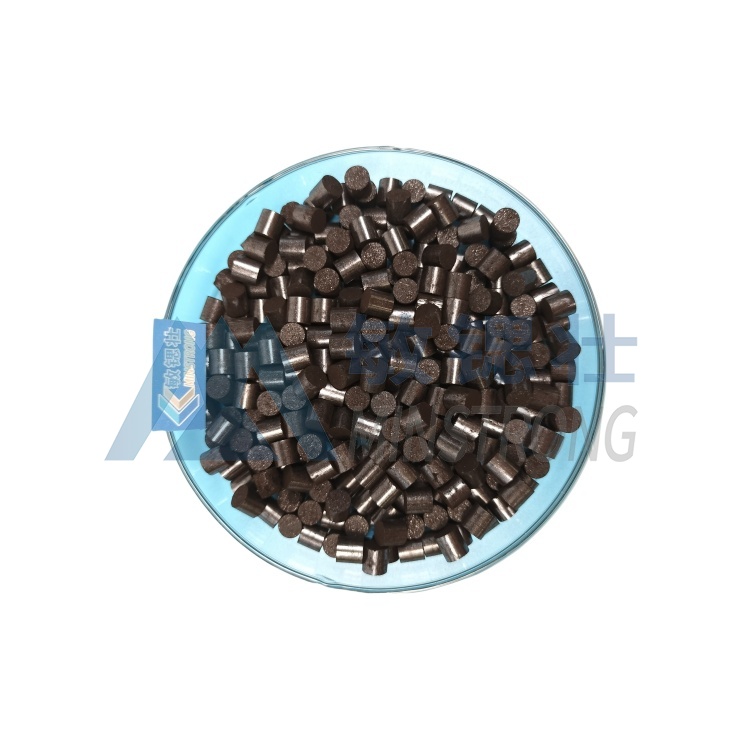
Activated manganese dioxide (Mn₂O₃), as a high-performance transition metal oxide functional material, has become a core raw material in batteries, electronics, and water treatment due to its excellent electrochemical properties. Its porous structure with high specific surface area and the reversible valence change characteristics of manganese precisely address the core pain points of high activity, high stability, and high adaptability in industrial applications, making it one of the most widely used manganese-based materials in the electrochemical field.
Activated Mn₂O₃ mainly exists in α, β, and γ crystal forms. Among them, the γ form, due to its stable layered structure and short ion diffusion path, is the preferred electrode material, achieving a specific capacity of 250-300 mAh/g in alkaline electrolytes. Its electrochemical activity originates from the reversible electron transfer of Mn³⁺/Mn⁴⁺, while surface hydroxyl groups and defect sites further enhance electrolyte interfacial reactions and improve charge storage capacity. The preparation process directly determines the performance. Chemical precipitation can control particle morphology to achieve high electrochemical activity, while electrolysis can produce high-purity products suitable for high-precision electronic components. Manganese salt, as the core precursor, directly affects the final application effect of activated manganese dioxide.
In practical industrial applications, the electrochemical advantages of activated manganese dioxide are fully demonstrated: as a cathode material for zinc-manganese batteries, its high specific capacity and low cost significantly improve battery life and cost-effectiveness; high-end capacitor electrodes made from composite carbon materials can meet the fast charging and discharging requirements of the electronics industry; in the field of water treatment, its redox properties can efficiently degrade organic pollutants, and its catalytic degradation efficiency is further improved when used in conjunction with iron and bismuth salts. Experimental verification shows that manganese dioxide nanowires prepared by the low-temperature hydrothermal method have a specific capacity that is about 15% higher than traditional granular manganese dioxide electrode materials at a current density of 1 A/g. Furthermore, modification with iron and cobalt salt doping can effectively suppress material structural collapse and significantly improve the cycle stability of activated manganese dioxide.
Currently, to address the issues of poor conductivity and cyclic volume expansion of activated manganese dioxide (MCO), the industry has optimized its performance through methods such as constructing a three-dimensional conductive network using carbon nanotube composites and stabilizing crystal structures by doping with zirconium/cobalt salts. Simultaneously, the development of green synthesis processes has further reduced production energy consumption and costs. Activated manganese dioxide can be customized to meet the needs of different industries. Its excellent electrochemical performance and flexible adaptability have continuously unleashed its application potential in the electrochemical field, making it an important material support for upgrading and improving various industries, and providing more efficient and economical solutions for downstream applications.
Author: Hazel
Date: 2026-03-17